
Consistently hitting your ROAS target is sometimes evidence of a problem
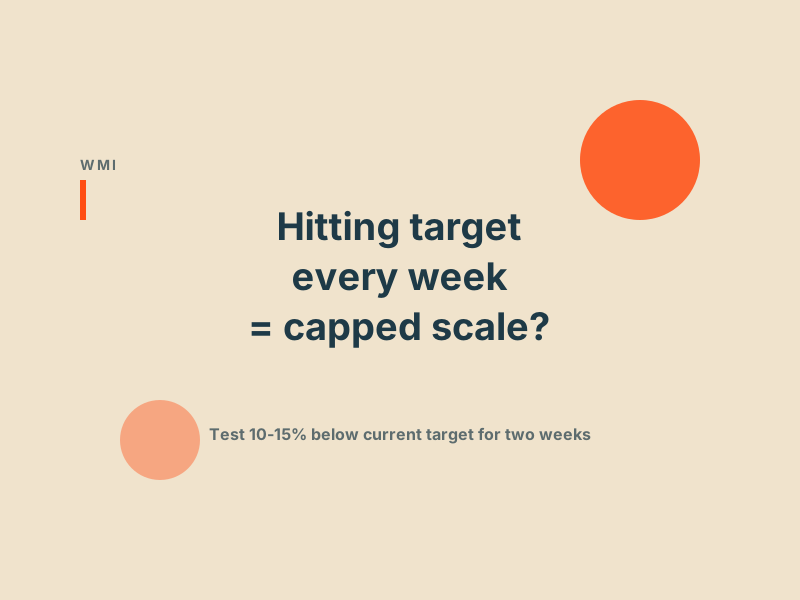
If your target ROAS is met every week with very low variance, Smart Bidding is probably capping your scale to stay in the comfort zone of its training data. The algorithm has found a narrow slice of inventory it can predict reliably and is circling it. A 400 percent ROAS target hit every week on flat spend is a system in equilibrium, not a system growing. Run a two-week test 10 to 15 percent below the current target.
Consistently hitting your ROAS target is sometimes evidence of a problem, not proof of success.
The unpopular read: if your target ROAS is met every single week with very low variance, Smart Bidding is probably capping your scale to stay in the comfort zone of its training data. The algorithm is excellent at finding the traffic that converts at your stated threshold. It is also excellent at avoiding the traffic it is uncertain about, including incremental volume that might convert slightly below target but still profitably.
A 400 percent ROAS target hit every week on flat spend is a system in equilibrium. It is not a system growing. The bidder has found a narrow slice of inventory it can predict reliably and is circling it.
The test
Run a two-week period at 10 to 15 percent below your current ROAS target. Do not change anything else. Watch whether conversion volume increases and whether actual ROAS comes in above the new, lower target. It usually does, because the algorithm finds additional volume it was previously avoiding out of caution.
If spend increases and ROAS still clears your minimum efficiency threshold, the previous target was holding growth back.
If volume does not move, the account genuinely is supply-constrained and the target was not the issue.
Either result is useful. The default assumption that "target hit = success" without running the test once leaves money on the table indefinitely.
Why most accounts skip this
Most accounts treat ROAS targets as fixed governance and missing them as failure. The political cost of running a deliberately lower target for two weeks is high if the team or client has been celebrating the current ROAS number.
The discipline that makes the test work:
- Agree the test scope upfront. Two weeks, defined start and end, what success and failure look like.
- Define the minimum acceptable ROAS during the test (the floor below which you abort, regardless of volume).
- Document the hypothesis before starting. "If we lower target by 15 percent, we expect spend to increase by X percent and conversion volume by Y percent."
- Hold the test for the full window even if early data looks bad. Smart Bidding takes 5 to 7 days to recalibrate.
- Compare against the prior 2 weeks at the old target, not against a historical average.
What to actually do
- Pick your largest tROAS campaign. The one where a 15 percent target reduction would generate meaningful incremental data.
- Lower the target. Hold for two weeks. Measure volume change, spend change, actual ROAS achieved.
- If incremental volume came in above your floor, the previous target was suppressing scale. Keep the new target.
- If volume did not move, restore the previous target. You have confirmed the account is supply-constrained and the target was not the issue.
- Run the test annually on each major campaign. Targets that were correct 18 months ago may not be correct now.
Sometimes missing your target is the signal the strategy needed all along.
What ROAS target have you not questioned in the last six months?
If you want help running this test on your account, book a free audit.
Get a free PPC audit from the team that wrote this.
We'll review your Google Ads or Microsoft Ads account and show you three specific things we'd change in the first 30 days.