
The WMI PPC blog.
Tactics, teardowns, and opinions on Google Ads and Microsoft Ads. Written by the team actually managing accounts.
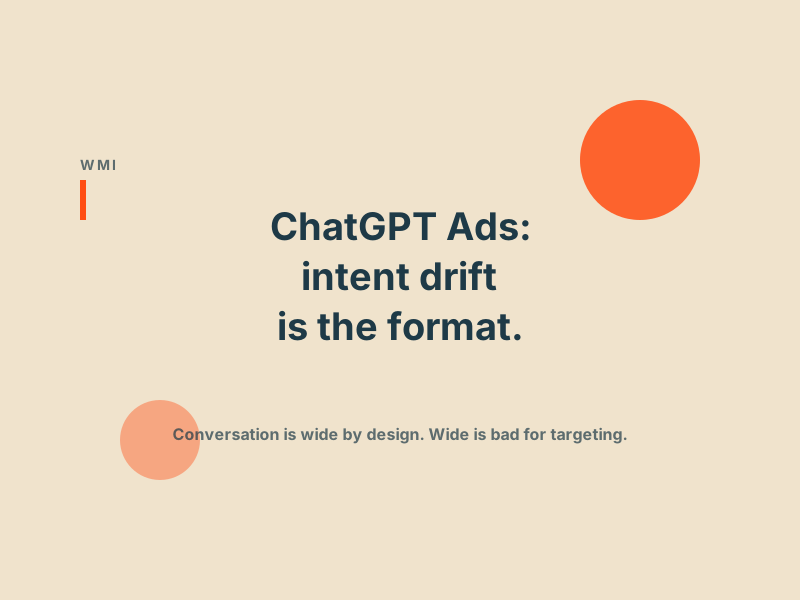
ChatGPT Ads do not read intent better than Google. The conversational format is why.
The pitch for ChatGPT Ads is that they read intent better than Google. The conversational format is the exact reason they do not. Search intent works because the query is the intent: someone types 'best CRM for a 5 person team' and you bid on that exact moment. A ChatGPT session is six topics in one thread. The ad surfaces later in the conversation, not at the moment the intent was expressed. Business Insider already named it: intent drift.
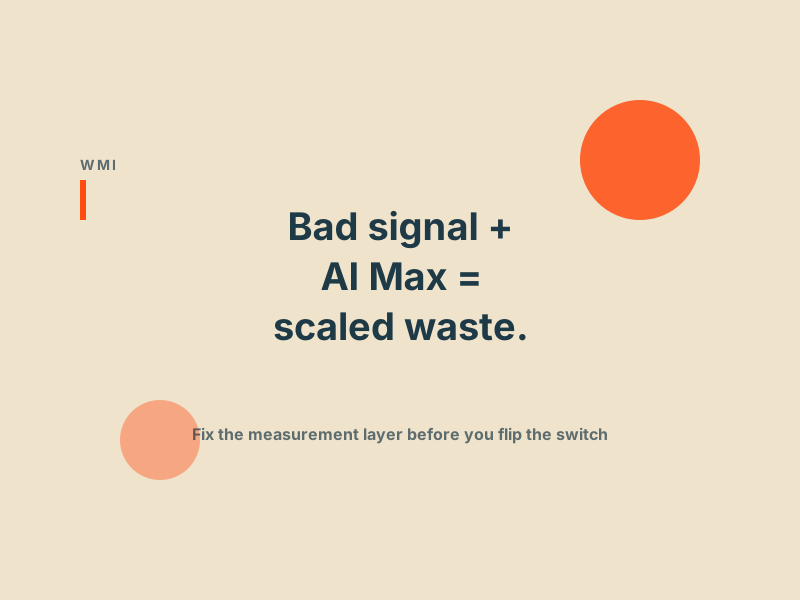
Before you turn on AI Max, fix the conversion data feeding it
Most accounts turning on AI Max are making a mistake. Not because AI Max is bad. Because they are feeding it garbage conversion data and expecting the algorithm to compensate. AI Max learns from your conversion signals. If you are counting form views as leads, if your GCLID passback is broken, if you are pulling in soft micro-conversions to pad the volume, the algorithm optimises toward that behaviour at scale. Faster, more aggressively, and with more of your budget than any manual campaign would.
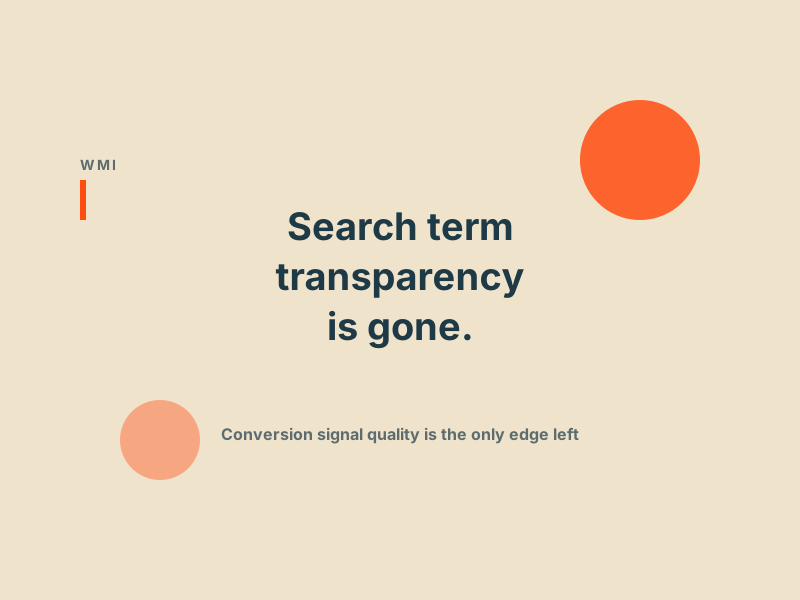
Google killed search term transparency the same week it made AI Max mandatory
Starting September 2026, Dynamic Search Ads are retired and AI Max is the replacement. The same week, Google changed search term reporting so only queries with 100+ impressions are visible. The long tail goes dark. The 'search terms' you do see in AI Max are AI-built intent approximations, not actual queries. You are auditing a synthetic representation of your own traffic. The only edge left is conversion signal quality.
Google's native checkout will hurt your first-party data more than it helps conversion rate
Google's native checkout is being sold as a conversion rate improvement. It is also the most efficient way to stop growing your first-party data. Universal Cart Protocol lets buyers complete purchases inside Google Search and Shopping without ever landing on your website. Fewer clicks, smoother path, higher conversion rate. No website visit means no pixel fires, no remarketing audiences grow, no email gets captured. The retention stack your team spent two years building goes quiet.
Google is deleting three years of historical ad data, export before June
Any reporting data older than 37 months will be permanently purged from Google Ads in June. Unique users, impression frequency, 7-day and 30-day frequency distribution, reach metrics. Gone. The framing is data hygiene. The inconvenient read is that long-term historical data is the primary tool advertisers use to identify gradual performance deterioration. Export your historical reach and frequency reports now.
Google killed Display campaigns. They are calling it an upgrade.
Starting today Google is migrating all Display Network campaigns into Demand Gen by 2027. The pitch: unified management, more visual surfaces, 9.5% ROI lift. That 9.5% comes from advertisers who added GDN inventory to an existing Demand Gen campaign, not from Display advertisers forced to migrate. Correlation dressed as causation. You lose granular placement exclusions, transparent site-level reporting, GDN-only with tight audience guardrails. Years of curated placement lists do not transfer.
AI-powered vs AI-driven: there is a difference and people are blurring it
I replaced my entire marketing team with AI agents. Cool. What happened the first time the agent sent the wrong message to 3,000 prospects? What happened when it paused the wrong campaigns and burned the month budget in 72 hours? What happened when a DELETE query ran without a WHERE clause? These are not hypotheticals. They are what happens when you take humans out of the loop and let AI act without review.
Google's Recommendations tab is a hypothesis generator, not a decision engine
The most expensive Google Ads decision we have seen this year came from an automated alert that nobody questioned. Account had a 28% spend drop over seven days. Recommendations tab flagged it. Someone increased bids. Spend recovered. Conversion volume did not. Three weeks later they were paying significantly more per conversion than before. Pattern detection without context produces hypotheses, not decisions.
Uploading your customer list to Google Ads does not automatically make Smart Bidding smarter
When you upload a customer list, you make those users identifiable to the auction system. That is it. The algorithm does not know what to do with the identification unless you give it explicit instructions. It will not deprioritise existing customers. It will not shift budget toward acquisition. It will not optimise toward lifetime value. It will bid on those users the same way it bids on everyone else, unless you configure otherwise.
The most underrated use of AI in creative work is classification, not generation
Most conversations about AI and creative work focus on generation: the model writes copy, the tool makes images. The more underrated use case is classification. Ad creative testing produces a lot of data. The question is not which ad won. The question is what pattern the winning creative shares with other high-performers, and whether that pattern holds across audiences. Manual analysis takes hours. AI classification takes 15 minutes and produces deeper output.
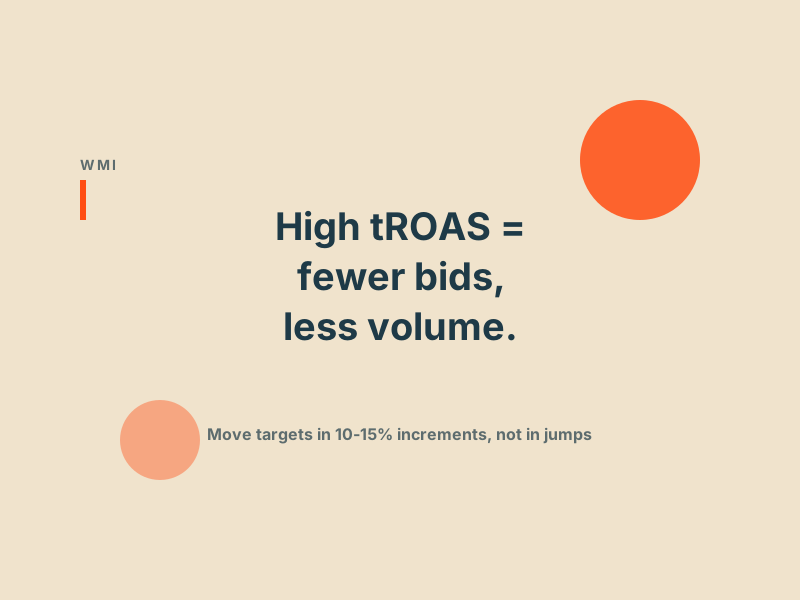
When you set a tROAS target campaigns cannot reach, Smart Bidding does not try harder. It bids less.
Google's tROAS algorithm targets a return on ad spend and adjusts bids to achieve it. If you set a 500% target on a campaign averaging 300%, the algorithm reads every auction as high risk and restricts spend. Impression share drops. Reported ROAS goes up (because you only win the highest-value auctions). Someone reads that as success. Meanwhile total conversions fall and you are leaving real revenue on the table.
Your 30-day attribution window is a political decision, not a measurement one
Most accounts use 30-day click attribution because that is the default and no one challenged it. The actual question is the purchase decision window for your customer. If you sell a product that takes two weeks of research, a 7-day window systematically undercounts conversions from upper-funnel campaigns. The reverse is also a problem. Attribution window mismatches are slow, invisible, and they compound across budget cycles.
Stop using search query reports for negatives. Use them as audience research.
Feeding search query reports into Claude changed how we build landing page briefs. Pull the top 100 queries driving conversions and the queries that spent without converting. Feed both sets with one question: what does the intent distribution tell us about what the landing page needs to address that it currently does not? The output is not copy. It is a gap analysis the CRO team can act on.
Broad match search-term reports show less than half the queries that actually triggered your ads
Google stopped reporting all matched search terms in 2020. Most practitioners know this in theory. Fewer have internalised what it means for broad match in 2026, when match logic is driven by intent modelling and audience signals rather than lexical similarity. Negative-keyword lists built from search term reports are incomplete by construction. Audience signals matter more than negatives now.
Your campaign can hit its daily budget and still miss peak conversion hours
Google's standard budget pacing spreads spend over the day. Enhanced delivery means the algorithm has discretion over when to accelerate and when to throttle. In practice, your budget can exhaust by 6pm in a market where your target audience is most active between 7 and 10pm. The platform does not flag this. Your campaign shows 100% budget utilisation. Reporting looks normal. But you have zero impression share during the window where intent is highest.
The best use of AI in ad copy is writing the brief, not writing the copy
This is where the workflow breaks down for most teams. A copywriter sits down with an AI tool, types 'write a Google Ads headline for [product]', gets five generic options, uses none of them, concludes AI is not useful for creative. The problem is not the model. It is the input. Use AI to construct the brief first. Better briefs produce better copy from AI and from humans.
Smart Bidding is doing exactly what you configured it to do, and that is the problem
Most Google Ads accounts feed their smart bidding algorithms the wrong conversion data, and the algorithm confidently optimises toward the wrong goal. Conversions are high, ROAS looks acceptable, but the conversion mix includes form views, scroll depth, and page visits alongside actual revenue events. The bidder learns toward the average signal. Auditing primary vs secondary conversion actions takes 20 minutes. Most accounts have never done it.
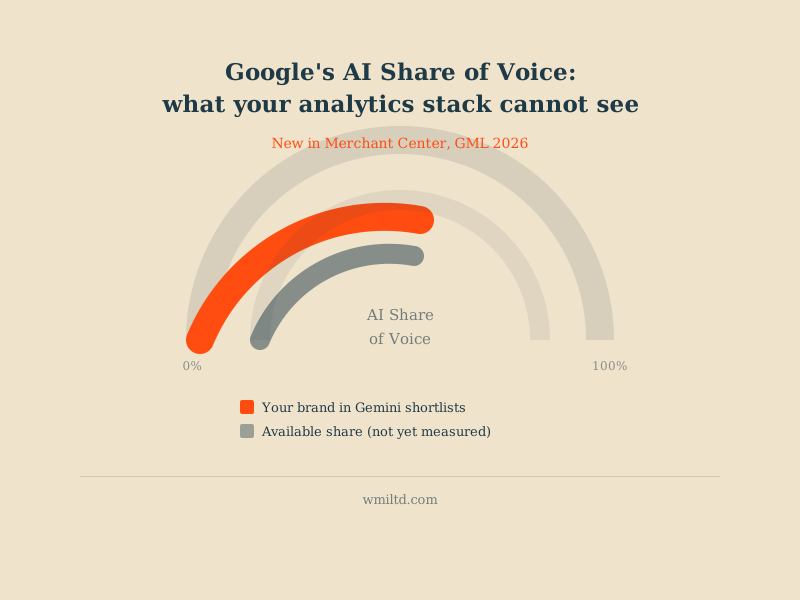
Google's AI Share of Voice in Merchant Center: what it measures and why it matters now
Google added AI Share of Voice to Merchant Center at GML 2026. It tracks how often your brand appears in Gemini's product recommendations, before any auction, before any click. Your current analytics stack cannot see this gap. Here is what the metric measures, who needs to own it, and what to do with a baseline.
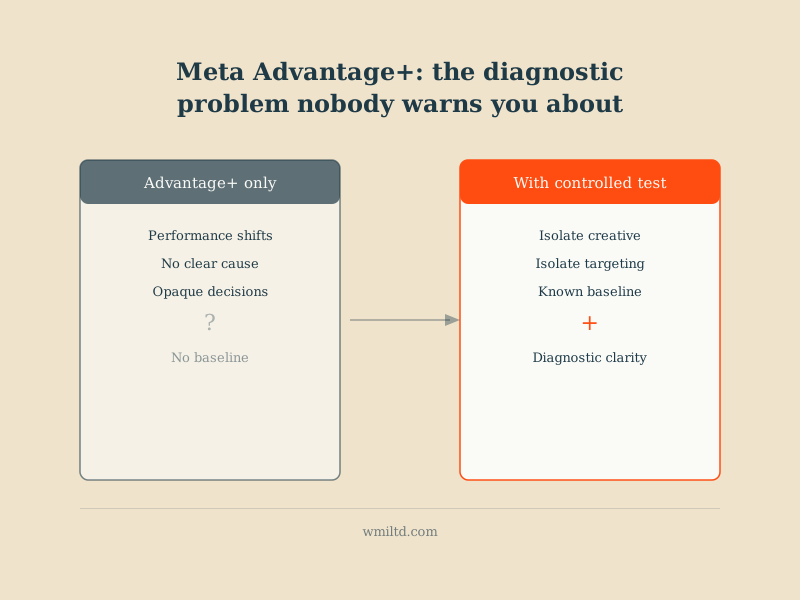
Meta Advantage+ Shopping: the diagnostic problem nobody warns you about
Advantage+ Shopping works. The failure mode is not the algorithm making bad decisions. It is that when performance shifts, you have no diagnostic layer left to explain why. Here is how to use Advantage+ without losing the ability to investigate when something goes wrong.
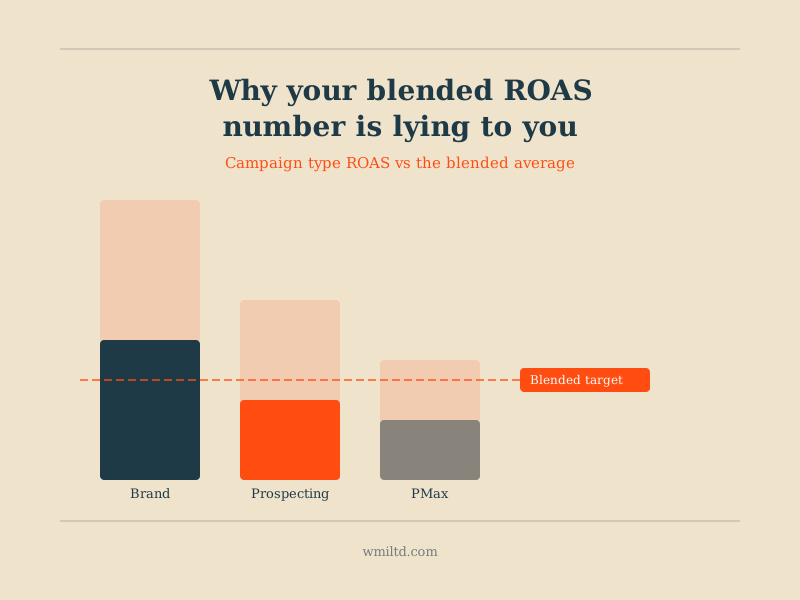
Why your blended ROAS number is lying to you
Your blended ROAS hits target, turns green, and stakeholders relax. But when you average brand search, prospecting, and Performance Max into one number, you lose the signal that tells you which part of your account is actually working. Here is how to separate the number that matters from the one that looks good.
The next attribution crisis: AI agents that never click
The next attribution crisis in paid search is not about tracking gaps or iOS privacy changes. It is about who is doing the searching. AI agents making purchasing decisions on behalf of users do not click ads. They query the model, receive a shortlist, the human sees the outcome not the process. If your brand is not in the model's training data, not cited in the sources the agent retrieves, and not reinforced by content the agent reads, you are not on the shortlist. No impression, no click, no conversion path.
The corpus is the moat, not the AI model
Every practitioner debating which AI model to use for Google Ads work is asking the wrong question. The model matters less than what you train it on. Two practitioners using the same model get completely different results because one fed it 12 months of annotated account decisions, campaign structure rationale, and business context. The other gave it a one-line prompt and a date range. The corpus is the moat, not the interface.
Reddit ads convert differently, and most advertisers measure them wrong
When someone on Reddit sees an ad, they do two things: check the comments on the promoted post, then search for the brand independently. The conversion event you track does not capture this. Your view-through attribution misses the Reddit-assisted path. Reddit intent profile is closer to Google than to Instagram, but creative requirements are closer to social. Measuring it like Meta is the most common mistake.
Consistently hitting your ROAS target is sometimes evidence of a problem
If your target ROAS is met every week with very low variance, Smart Bidding is probably capping your scale to stay in the comfort zone of its training data. The algorithm has found a narrow slice of inventory it can predict reliably and is circling it. A 400 percent ROAS target hit every week on flat spend is a system in equilibrium, not a system growing. Run a two-week test 10 to 15 percent below the current target.
Your 30-day attribution window and weekly ROAS targets are mathematically incompatible
Smart Bidding sees a click, waits up to 30 days for a conversion. But the account is reviewed weekly. If ROAS looks low on Wednesday, someone adjusts the target before the attribution window closes. The algorithm trains on incomplete data, then gets new instructions before the previous one finishes resolving. The bidder never stabilises. This is a measurement architecture problem, not a bidding problem.
Performance Max is bidding on your brand terms and charging you more than Search would
The mechanism is not obvious. PMax wins auction priority over Search campaigns in many configurations. When a branded query enters the auction, PMax can intercept it before your dedicated brand campaign competes. The reported search term shows the brand name. The underlying dynamic shows PMax absorbing the impression at a higher CPC than a brand-specific Search campaign would have paid. Account-level negative keyword lists fix it. Most accounts do not have them.
ChatGPT is now a CPC ad platform, test budget before CPCs normalise
OpenAI opened ChatGPT to paid ads with conversion tracking and opening bids of $3 to $5 per click. The duopoly does not change because of the format. It changes because of the position in the decision journey: ChatGPT users have already narrowed down the question. The right move is not to redirect significant budget. It is to allocate a test envelope now, before the channel matures and CPCs normalise upward.
How brands grow 3x share of voice in AI search results without paid budget
A brand grew to 3x share of voice in AI search results in three months. No paid budget. Concentrated content investment in categories where they had genuine authority. The PPC community has largely ignored this because it does not look like a campaign you can launch. No bid, no keyword, no spend dial. That makes it look like SEO. The strategy maps cleanly onto what PPC practitioners already know.
Why the average agency retainer lasts 4.7 months
The average agency retainer lasts 4.7 months before cancellation. The common explanation is impatient clients or a competitive market. Both are probably true. Neither is the real reason. Most retainers do not fail because the work was bad. They fail because no one defined what success looked like in month 1, month 3, or month 5. Recurring revenue built on undefined success criteria is not recurring revenue. It is deferred churn.
Meta Andromeda does not care about your campaign structure
Meta's three-layer system (Lattice, Andromeda, GEM) operates horizontally across your account. Campaign boundaries, ad set budgets, audience segments: all of it is input, not instruction. Most advertisers still audit Meta accounts by looking at ad sets and budgets first. That is reading the wrong layer. The account management skill that mattered in 2020 was structure. The skill that matters now is creative pipeline velocity.
Non-biddable conversions may be feeding Smart Bidding without your knowledge
Google quietly updated its Conversion Goals documentation to confirm non-biddable conversions can enhance Smart Bidding predictions. The ones you mark as observation-only. Phone calls you track but do not bid toward. Scroll depth events. Newsletter signups. If they fire incorrectly, capture noise rather than intent, those signals may be feeding the bidder in ways you cannot see and cannot switch off.
AI without a governance layer is autocomplete with a budget
Practitioners are not asking 'can AI manage Google Ads?' anymore. They are asking who owns the decision. That is the more interesting question and most implementations do not have a clean answer. The Claude MCP integration for Google Ads is getting serious attention, not because the capability is new, but because the conversation shifted from 'can it do this?' to architecture: what should AI touch, what requires human sign-off, where does automation end and accountability begin?
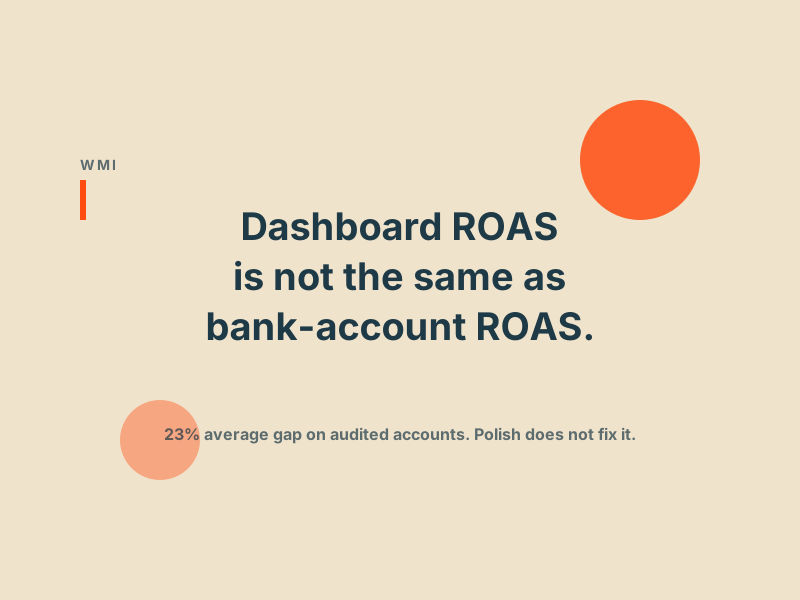
Your Google Ads dashboard says 4.1x ROAS. Your bank account says 2.3x.
An audit of 50 accounts found a 23 percent average gap between in-platform ROAS and actual revenue. On a $200K/month account that is a $46K monthly blind spot. Attribution software does not fix this. The gap comes from compounding sources: cross-device journeys not stitched, view-through conversions double-counted, GA4 channel groupings silently reassigned, last-click models crediting the wrong touchpoint. Before you trust a ROAS number, audit the definition.
Discounting to win new clients is often a positioning mistake
In markets where buyers cannot assess quality before they purchase, price is one of the few credible signals available. Agencies, consultants, advisors all fall into this category. The work is invisible until it is delivered. When you discount, you are not just accepting lower margin. You are signalling that your standard rate was either wrong or negotiable. Both interpretations damage the relationship before it starts.
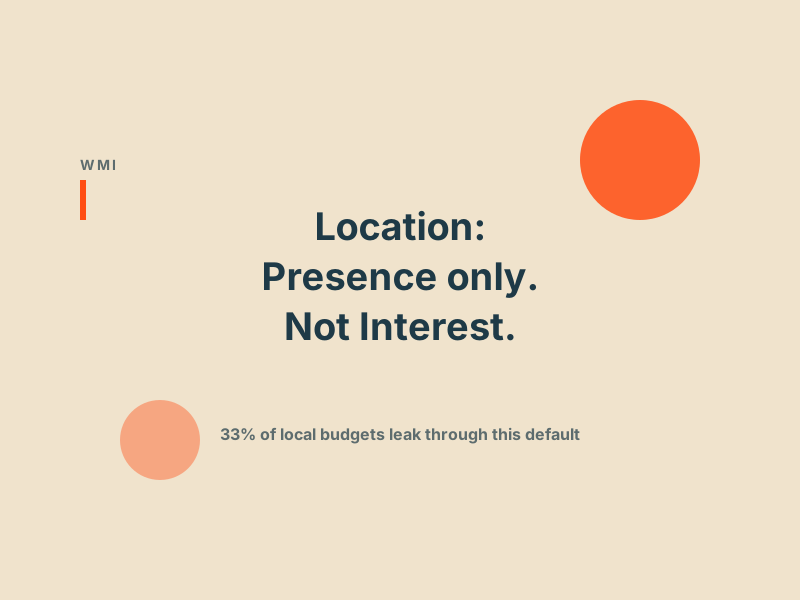
The Google Ads default silently draining local budgets
When you create a new campaign, Google sets location targeting to 'Presence or interest' and labels it recommended. That framing is doing a lot of work. Your ad for a Manchester dental practice shows to someone in London who recently searched 'dentists in Manchester' while researching a trip. They are never walking in. You paid for the click. A practitioner shared live account data showing 33.81% of spend going to interest-based impressions. Three-click fix.
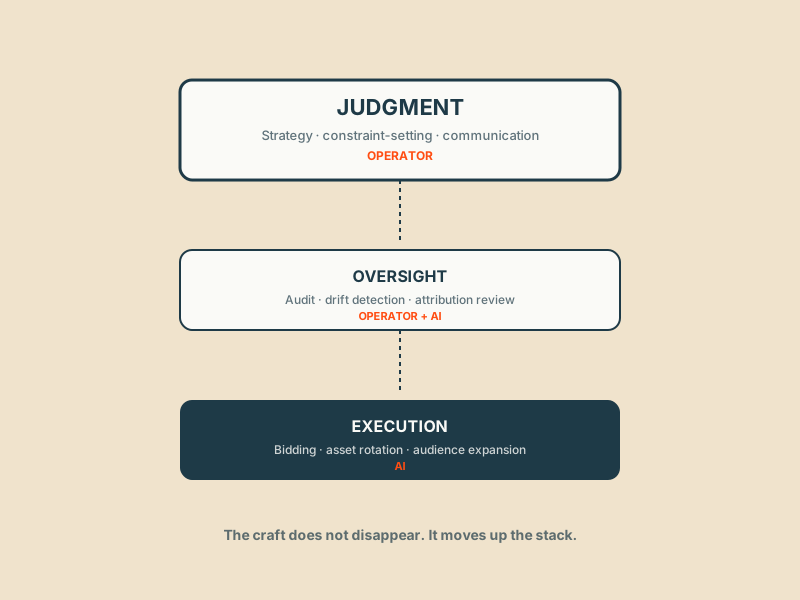
AI does not replace media buyers, it moves the work up the stack
The 'AI replaces the media buyer' narrative assumes the buyer's job is to do things. It is not. The job is to know what to do, when, and why, to catch the signal the platform missed, decide the bid floor doesn't make sense this week, tell the client the channel mix needs changing before the report confirms it. AI handles volume. The operator handles judgment. Operators who treat AI as a threat will lose. Operators who treat it as a substitute for their own judgment will lose faster.
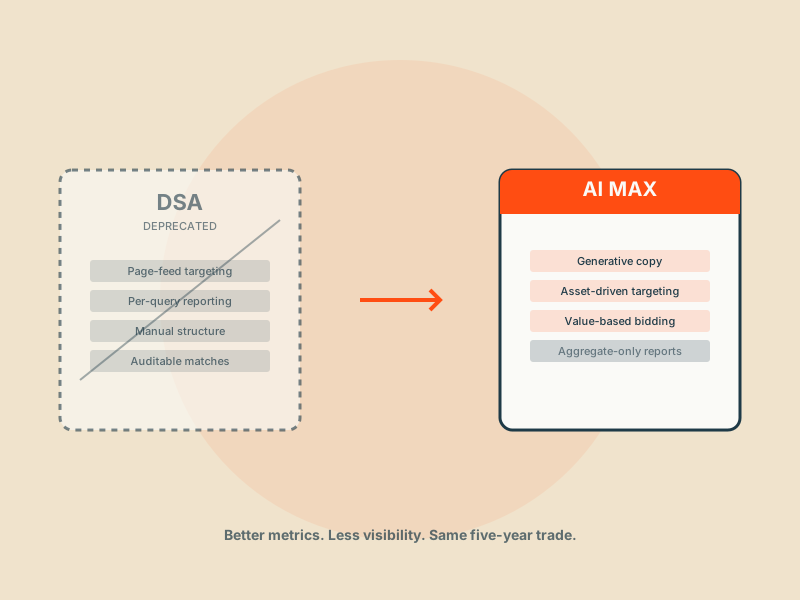
AI Max for Search vs DSAs: what you lose when you accept the trade
Google is replacing Dynamic Search Ads with AI Max for Search. Better automated targeting and easier set-up in exchange for less visibility into which query matched, which page got served, and what triggered the auction. The five-year pattern: slightly better metrics, slightly less transparency. Here is how to take the upside without losing the audit layer.
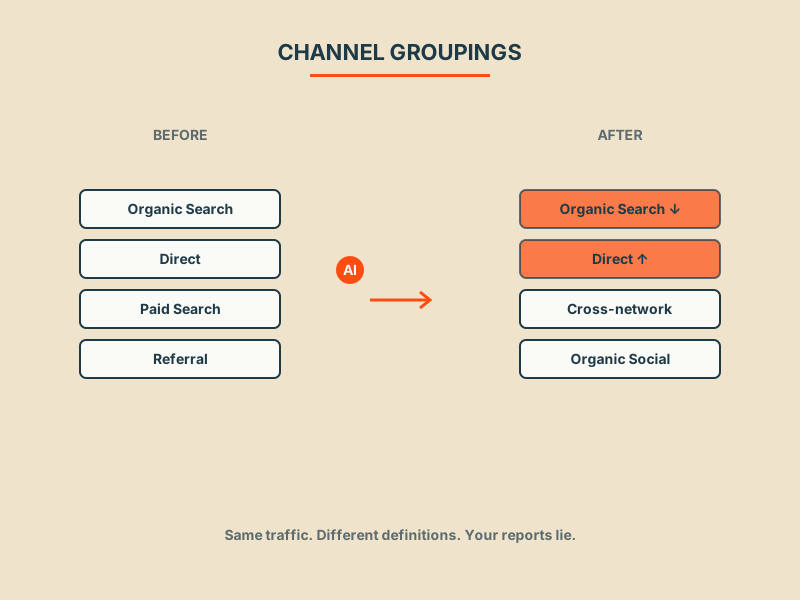
GA4 is changing channel groupings under your nose, audit yours before the reports lie
GA4's AI Assistant is quietly rewriting default channel groupings while your dashboards keep looking clean. Branded traffic shifts into Direct, social referrals migrate to Organic Social, year-on-year comparisons stop being comparable. If you don't own the definitions in your reporting stack, you don't own the insight.
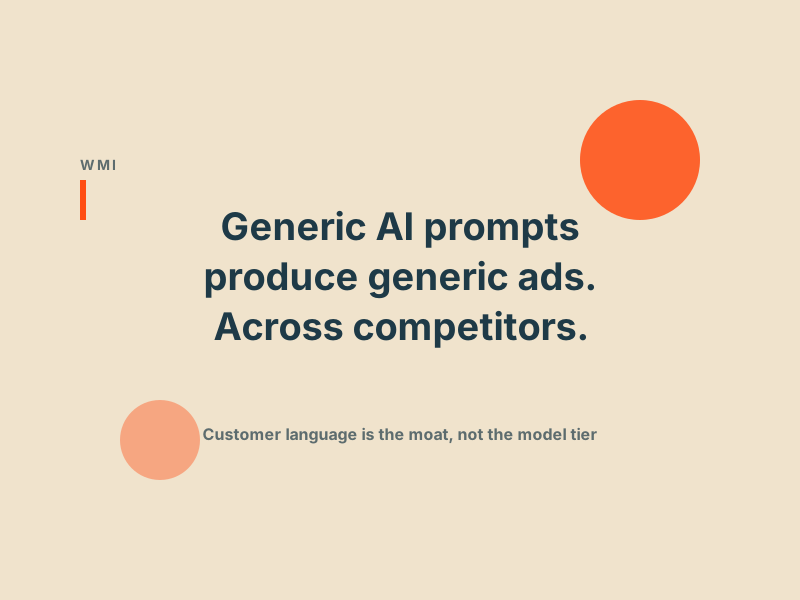
AI wrote my ad copy. It also wrote yours. And your competitor's.
Responsive Search Ads trained on the same 'write high-converting ad copy' prompts, fed into the same LLMs, for accounts in the same vertical, will converge. The outputs sound the same because the inputs are the same. We tested ten competitor ads in a single vertical: six shared near-identical headline patterns. The differentiation is gone before the ad even shows. The fix is not a better prompt. It is better inputs.
Most Google Ads accounts are over-bidding on brand campaigns
A business spends £4,000/month on non-brand and another £800 on bidding on its own name against zero real competition. The logic gets dressed up as 'protecting brand real estate' or 'owning the full SERP'. The data rarely supports it. Most accounts that pause brand for two weeks see no meaningful change in direct traffic or revenue. Brand campaigns often exist because they make ROAS look good, not because they drive growth.
Stop asking AI for ad copy. Give it context first.
Replacing copy brainstorming with a 10-minute Claude prompt is not a magic trick, but it is useful when you stop treating the model like a vending machine. The shift that makes it work: stop asking for copy, start giving context. Offer, competitor positioning, the objections prospects walk in with, what the sales team hears on calls. With that context the model argues for angles, not just headlines.
Your 8x ROAS is a story you are telling yourself
ROAS is a ratio, not a result. It tells you how much revenue you attributed per pound spent. Nothing about profit, nothing about incrementality, nothing about what would have happened without the ad. Retargeting at 12x ROAS often means the ad took credit for buyers who were going to buy anyway. Prospecting at 2.5x ROAS gets killed even when it is the only thing actually bringing in new customers. Measure what moves the business.
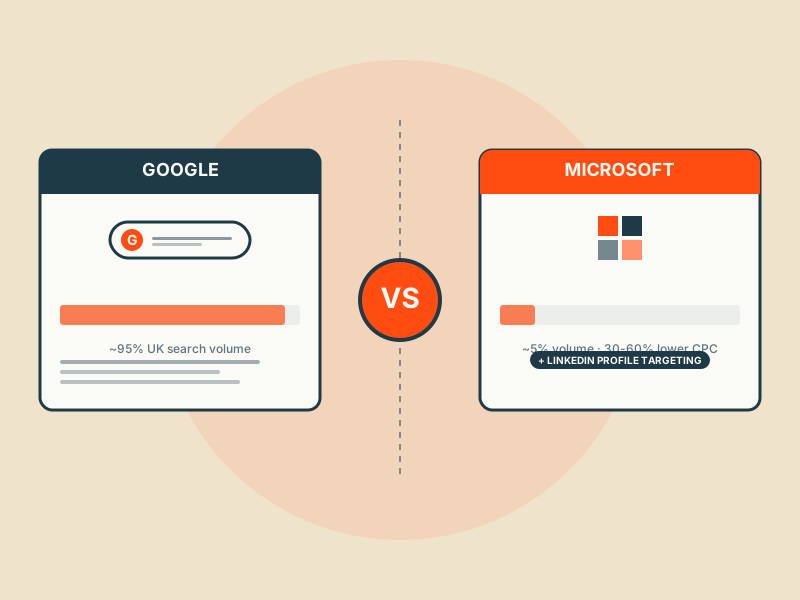
Google Ads vs Microsoft Ads in 2026: which to start with
Short answer: Google first, Microsoft 90 days later, except for B2B accounts where LinkedIn Profile Targeting changes the maths. Here's the long answer with numbers.
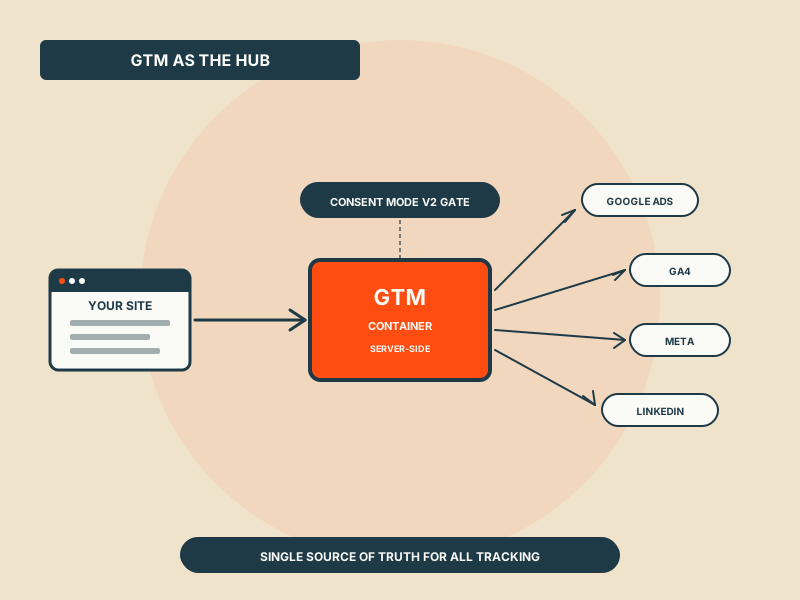
Google Tag Manager setup in London, what a proper implementation includes (and the shortcuts that break things)
GTM looks easy. Done badly it breaks tracking for years before anyone notices. Done properly it becomes the single source of truth for everything you measure. The implementation choices that matter.
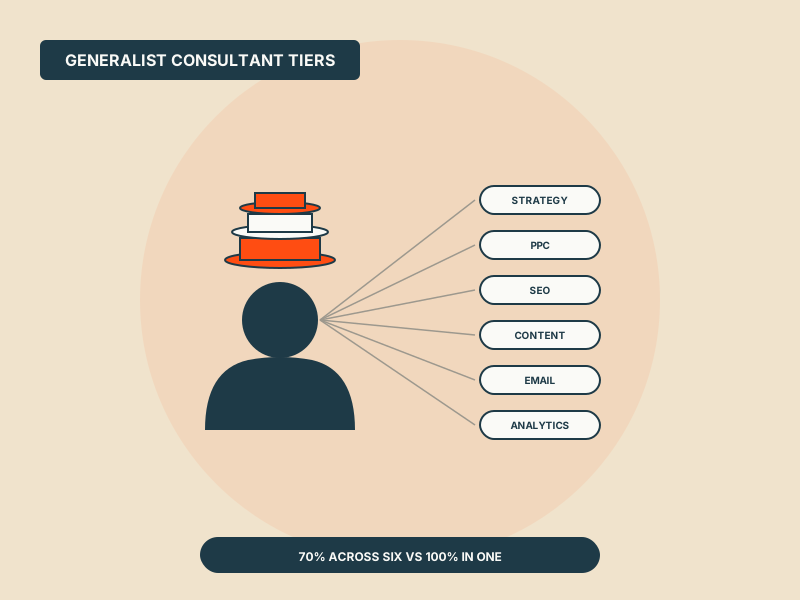
Digital marketing consultant in London, when the generalist scope actually pays vs when you need a specialist
A London digital marketing consultant covers the full marketing function, not one channel. The trade-off: breadth instead of depth. When that trade-off is the right one, and the four signals it isn't.
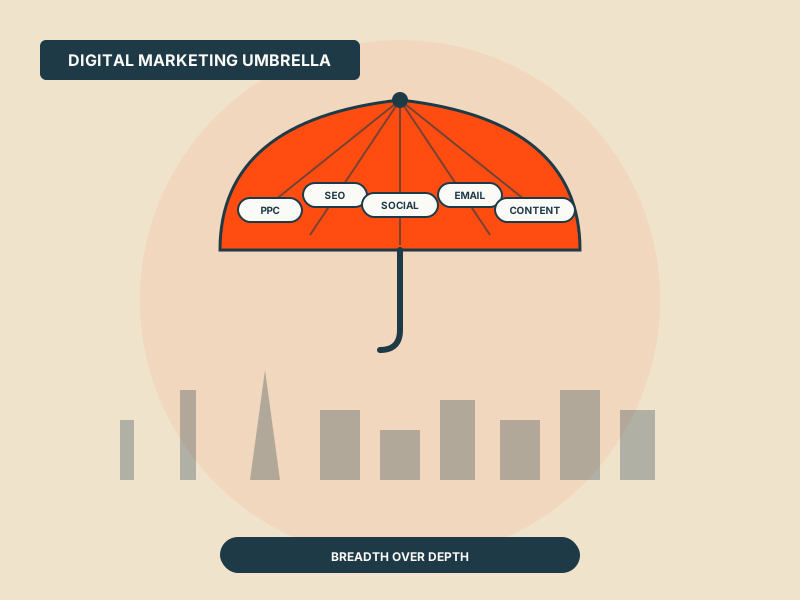
Digital marketing agency in London, what "digital marketing" actually covers and when an umbrella agency is right
"Digital marketing" is the broadest scope label in the agency market. London has hundreds of digital marketing agencies and they're not interchangeable. A scope-and-fit framework.
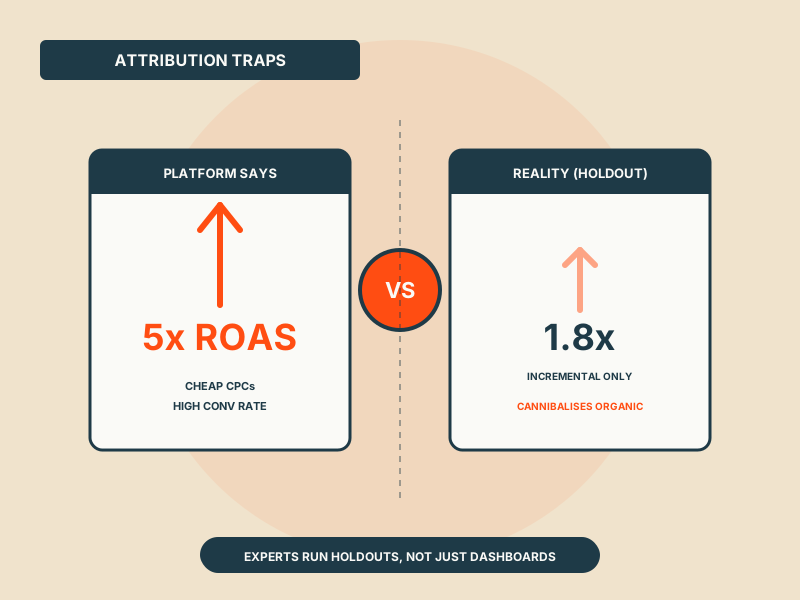
Performance marketing expert, the 5 attribution traps every claimed expert should be able to see through
The deepest skill in performance marketing isn't running ads, it's measuring what's actually working. Five attribution traps that separate genuine experts from impressive-sounding ones.
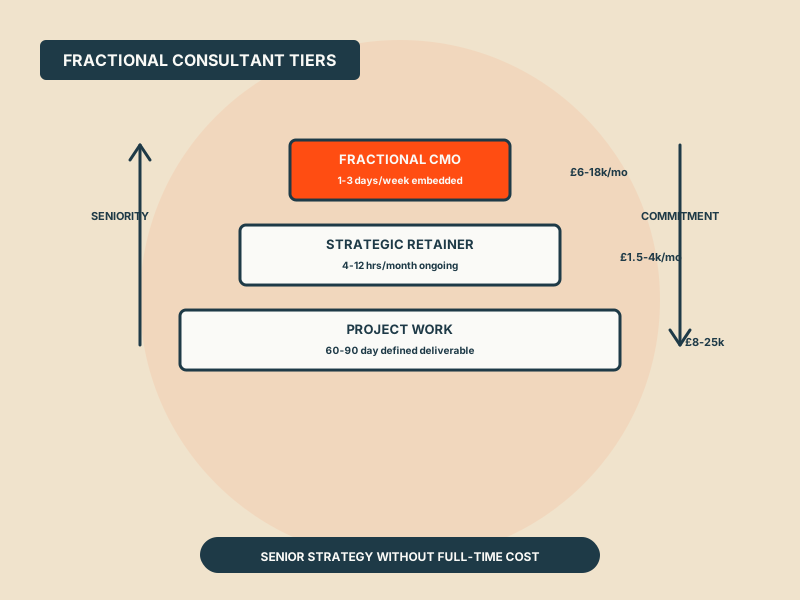
Performance marketing consultant, when fractional senior strategy beats hiring an agency or in-house lead
A performance marketing consultant fits a specific gap: senior cross-channel strategy without the cost of a full-time CMO or the bureaucracy of an agency. Here's when that gap is real.
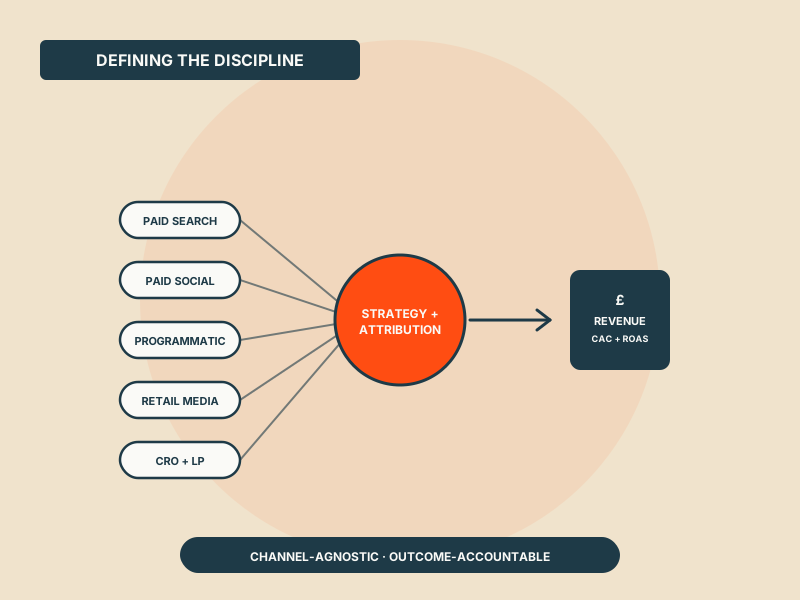
Performance marketing agency, what the term actually means and why most "performance marketing agencies" aren't
"Performance marketing" got hijacked as a marketing label. The real discipline is narrower, more measurable, and harder than most agencies claiming the title actually do. A clarification.
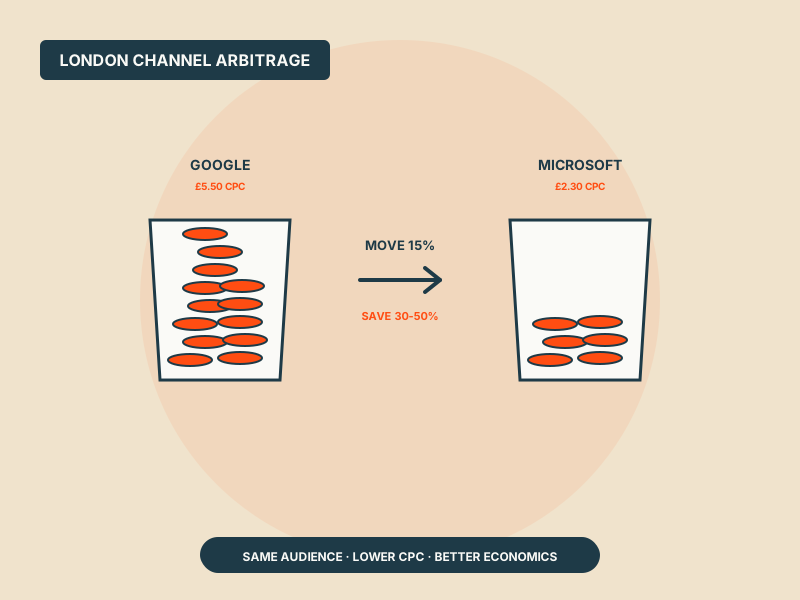
PPC management in London, multi-channel arbitrage in the UK's most expensive auction
Single-channel PPC management gets quietly inefficient in London. Multi-channel scope (Google + Microsoft + sometimes Amazon) opens arbitrage opportunities that pay for the agency premium and then some.
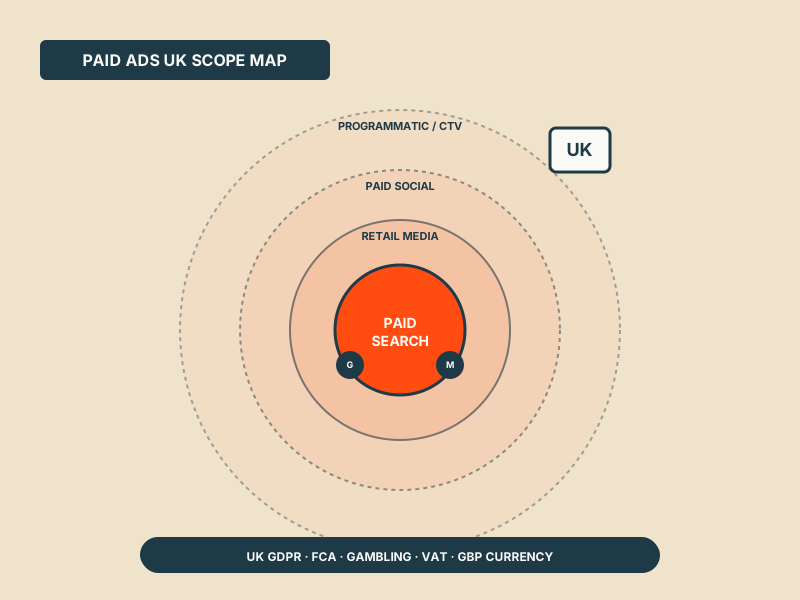
Paid ads management in the UK, what "paid ads" includes beyond PPC, and what changes for UK accounts
"Paid ads management" is broader than PPC, it covers paid search plus paid social plus display. The UK adds country-specific compliance and economic context. A scope-and-context map.
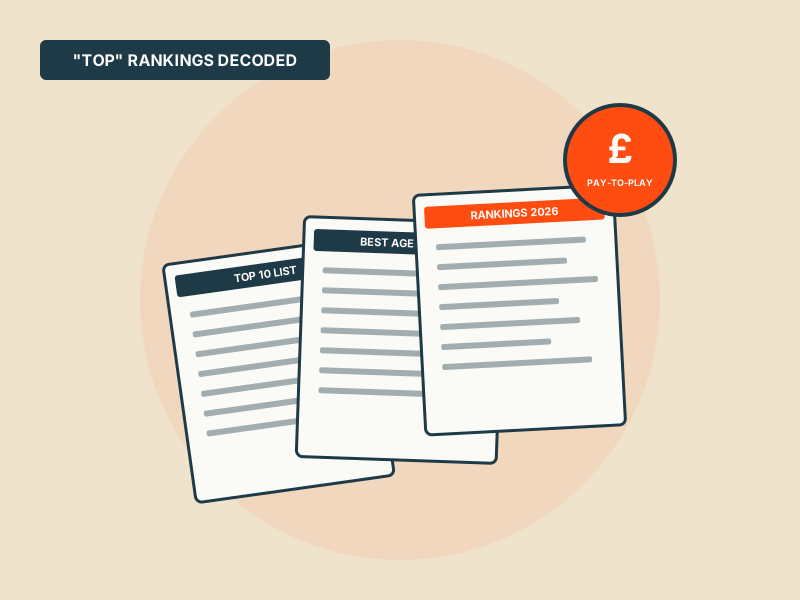
"Top PPC agencies" rankings, how the lists actually work and why most are pay-to-play
Search "top PPC agencies UK" and you'll find list articles ranking the same agencies in different orders. A look at how those rankings get made and why they don't reliably tell you who's actually good.
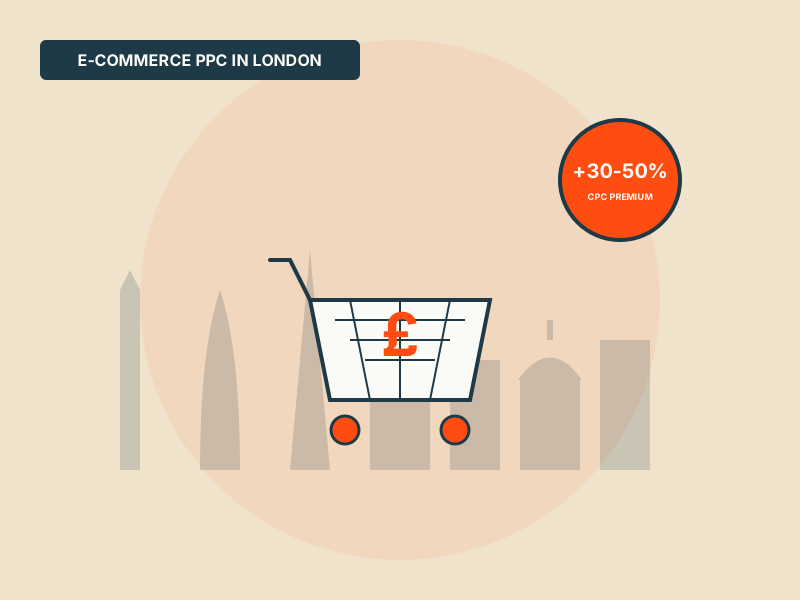
E-commerce PPC for London businesses, what changes when you sell from the UK's most expensive auction
London-based e-commerce brands run PPC against higher-CPC, more-competitive auctions than peers in Manchester or Birmingham. The structural choices that change at this level.
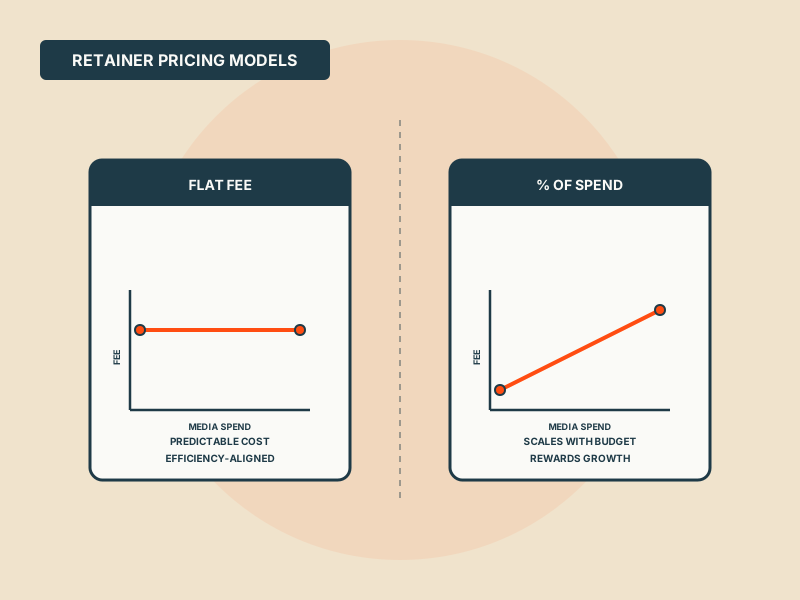
PPC management retainer, flat-fee vs percent-of-spend, and what each model rewards
PPC retainers come in two main shapes. They look similar on the invoice and behave differently in practice. The trade-offs that matter when picking which to sign.
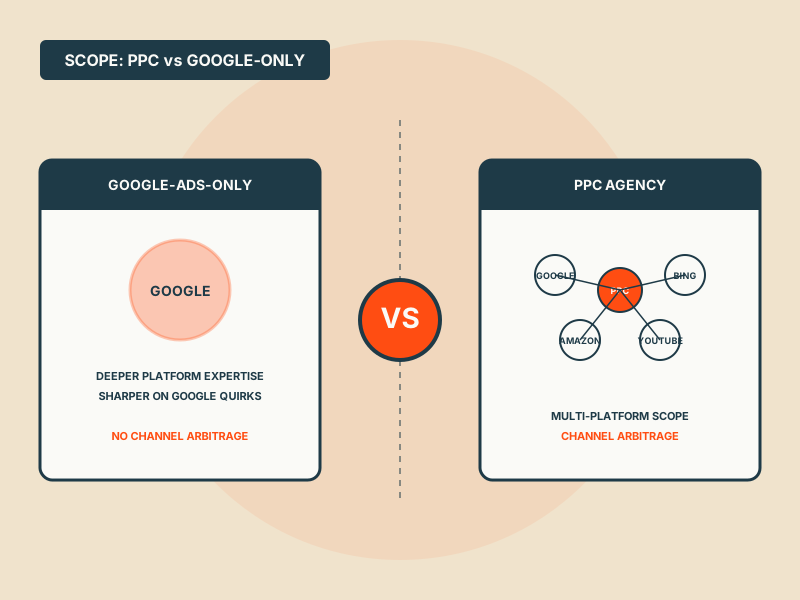
PPC agency vs Google Ads agency, when single-channel and multi-channel scope each pay
They sound similar; they're not. A PPC agency runs multiple paid-search platforms; a Google Ads agency runs one. Picking the wrong scope for your account is one of the quieter buying mistakes.
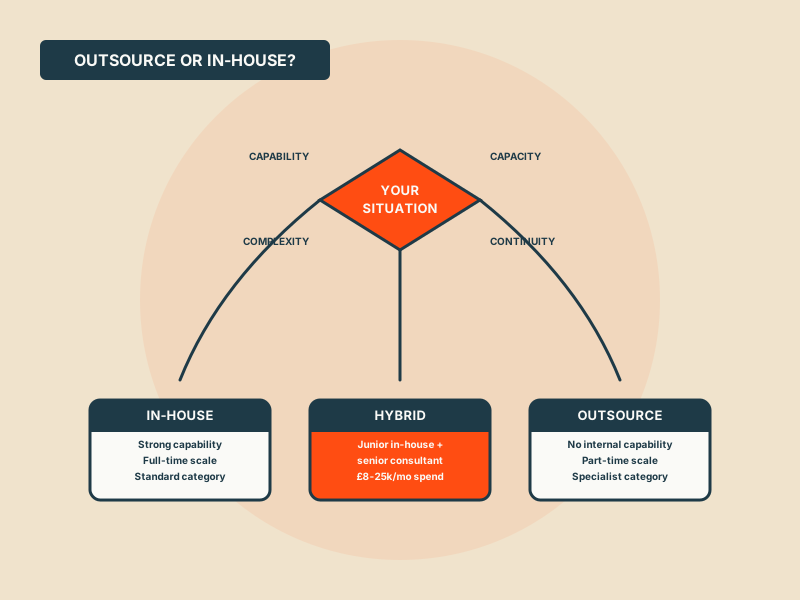
Should you outsource PPC management? A decision framework for in-house teams
"Outsource or keep in-house" gets answered on cost too often, and on capability too rarely. The framework that separates the businesses that should outsource from the ones that shouldn't.
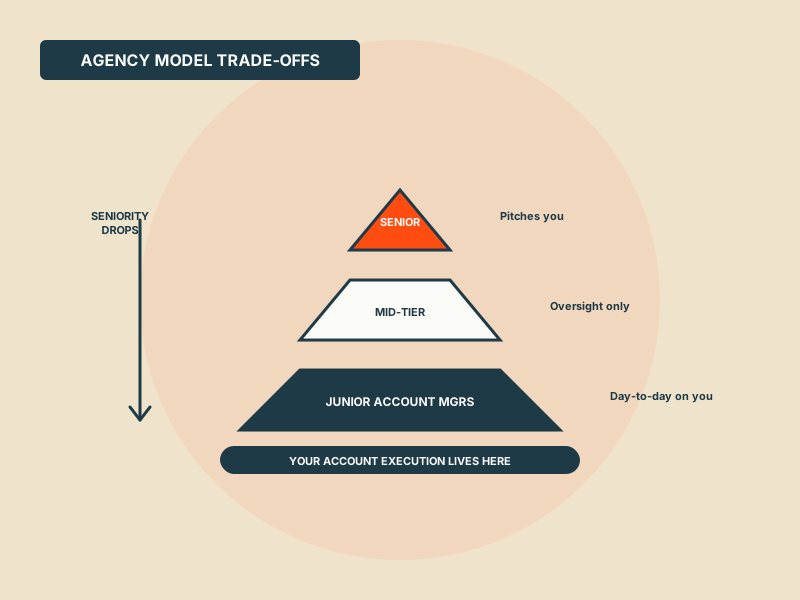
Choosing a Google Ads management agency, the agency-model trade-offs nobody mentions in the pitch
Hiring an agency rather than a consultant or freelancer is a structural choice with consequences. The trade-offs that show up in month four, not month one.
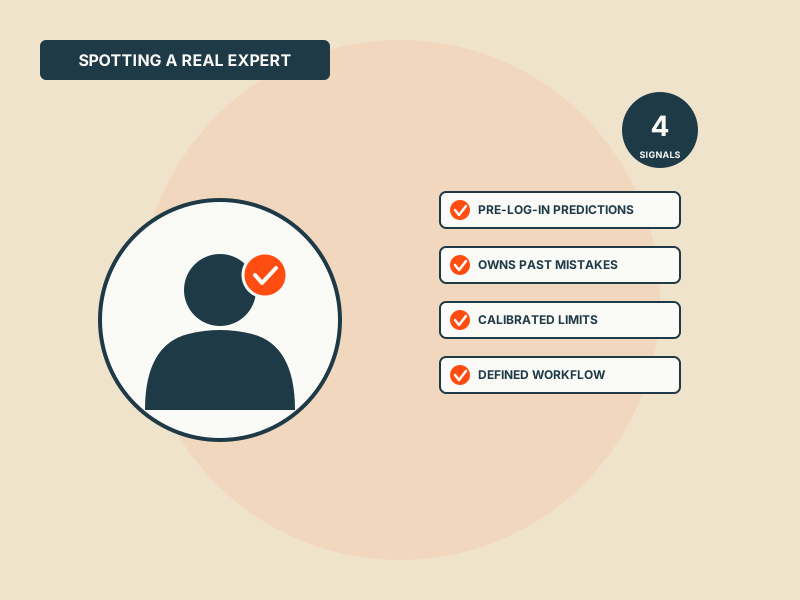
Google Ads expert, what the title actually means in 2026 and how to spot a real one
"Google Ads expert" went from a meaningful credential to a self-issued LinkedIn title. Here's what the term should mean today, and the four signals that separate genuine expertise from claimed expertise.
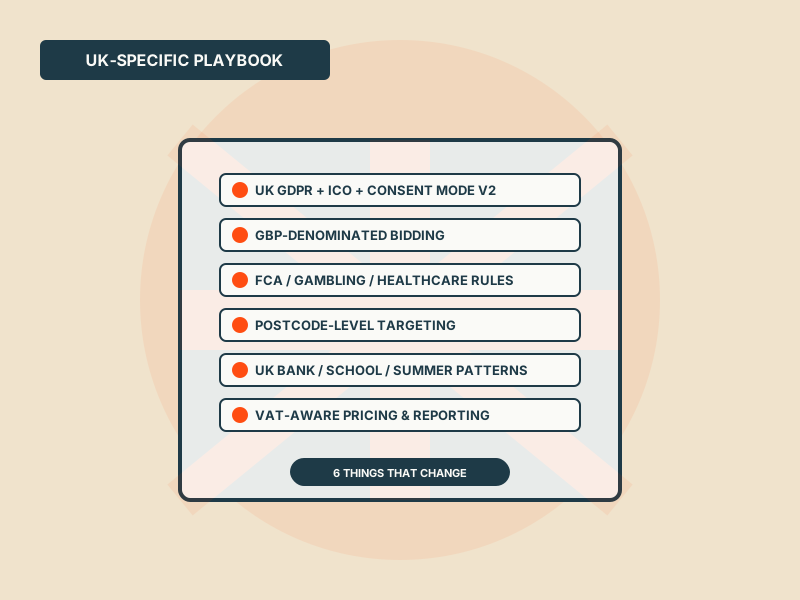
Google Ads management for UK businesses, the country-specific things that change the playbook
A US-built playbook applied to a UK Google Ads account quietly leaks performance. Six things that work differently here, and a manager who doesn't know them is running with last year's manual.
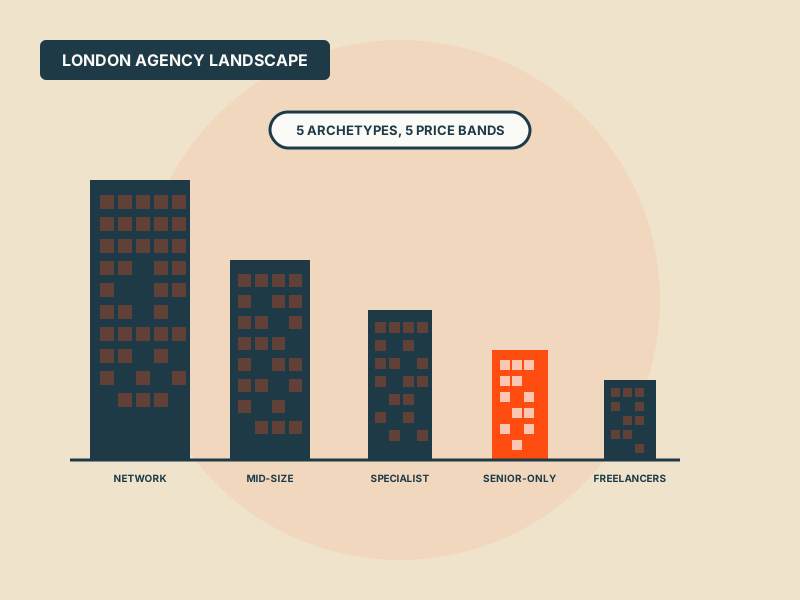
Google Ads agencies in London, how to read the landscape and find the right one
London has more Google Ads agencies per square mile than anywhere else in the UK. Most pitches sound the same. A field guide to the actually-different patterns underneath.
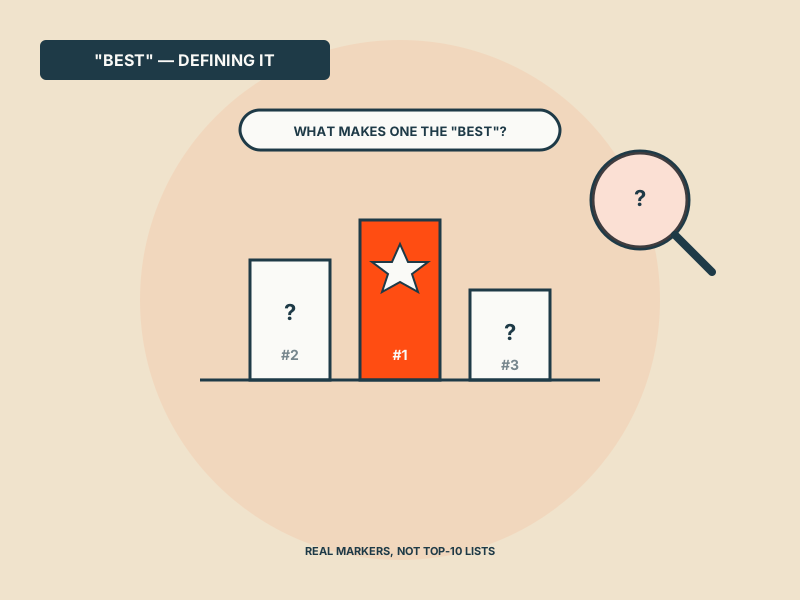
What "best" actually means in a Google Ads consultant, and why most rankings are unreliable
Search "best Google Ads consultant" and you'll find lists. Most of those lists are pay-to-play. The real markers of "best" are unglamorous and rarely listed.
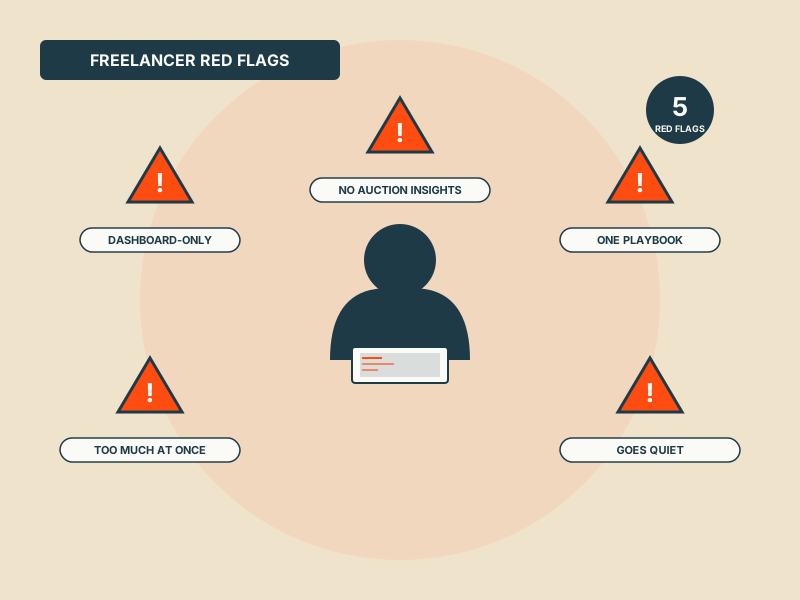
Google Ads freelancer, what you get, what you miss, and the 5 ways bad ones blow up accounts
Freelancers are the lowest-friction way to get Google Ads help. They're also the highest-variance. The patterns that separate the ones who save your account from the ones who quietly sink it.
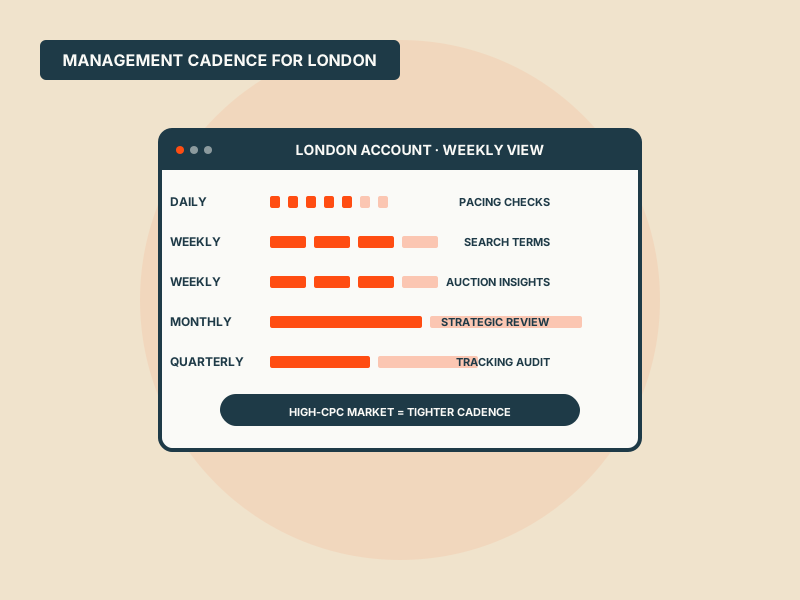
Google Ads management in London, what an account in the UK's most expensive auction market needs
The management playbook that works at UK regional CPCs quietly falls over at London prices. What changes, in cadence, in structure, in reporting, when you're operating in the most expensive paid-search market in Britain.
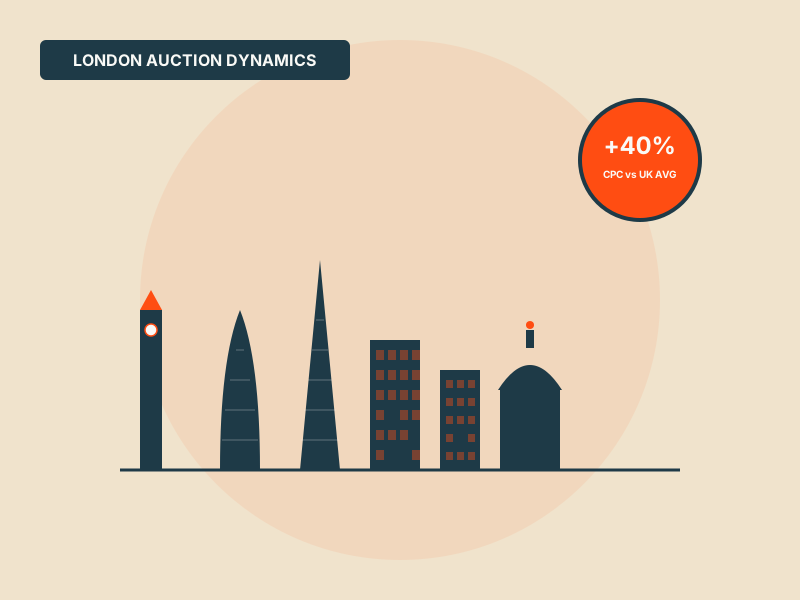
Hiring a Google Ads consultant in London, 5 things that only matter at this auction level
London CPCs run 30–60% above the UK average. The playbook that works in Manchester or Birmingham quietly falls over at London prices. What to look for in a consultant who actually operates at this level.
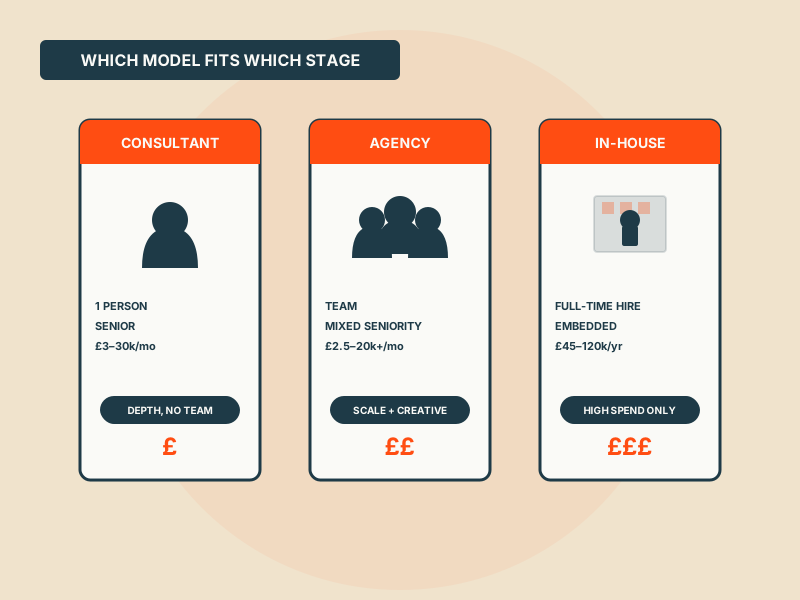
Google Ads consultant vs agency vs in-house, which one fits which business
Three different engagement models that do similar-looking work at radically different price points and accountabilities. A framework for which matches your stage.
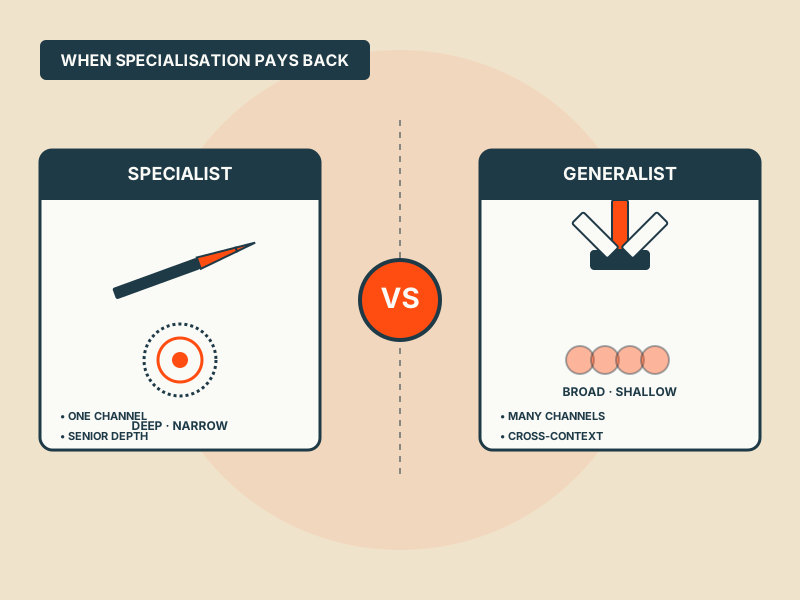
Google Ads specialist vs generalist: when specialisation actually pays
A specialist is more expensive per hour and narrower in scope. For some accounts that's a waste; for others it's the difference between performance and slow decline.
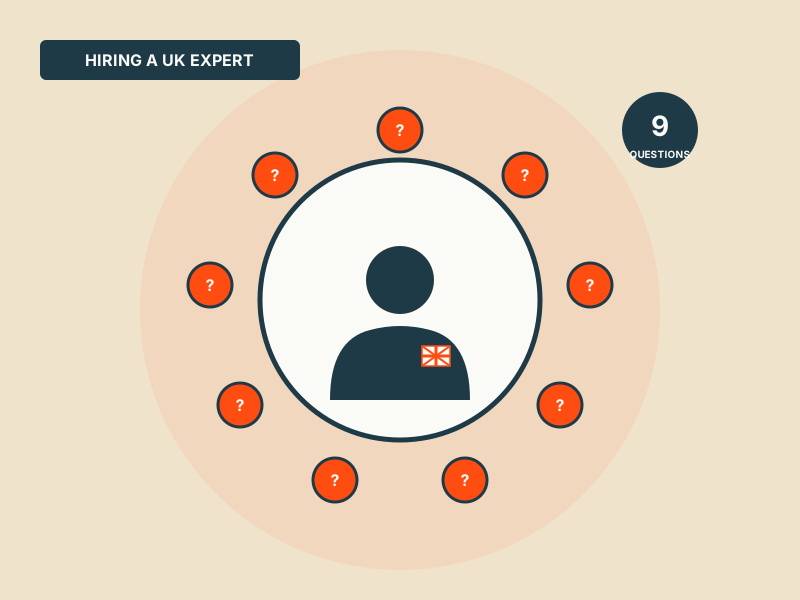
How to hire a UK Google Ads expert, 9 questions that separate the good from the ordinary
Everyone calls themselves an expert. These are the questions that expose who's done the work and who's done a certification course.
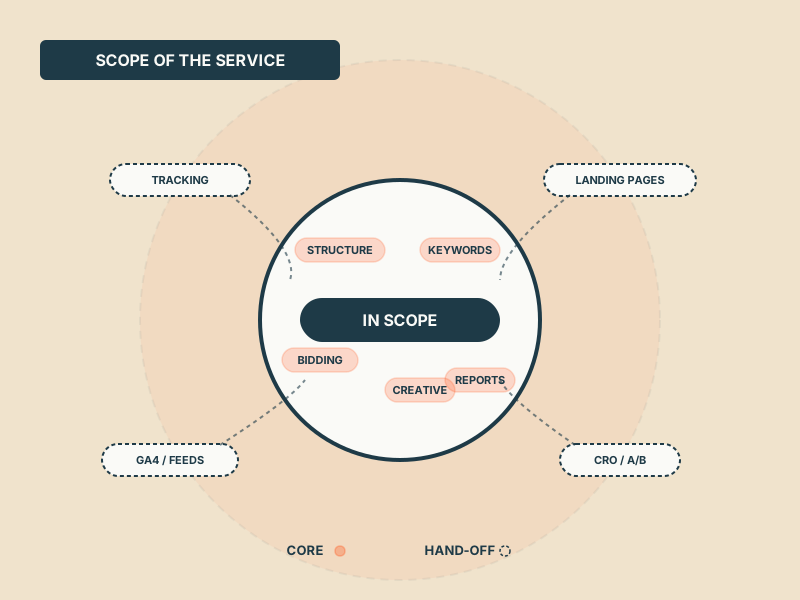
What a Google Ads management service actually does (and doesn't)
"Management" is a container word, different providers put wildly different work into it. A plain-English breakdown of what's inside the service, what's outside, and where the hand-offs should sit.
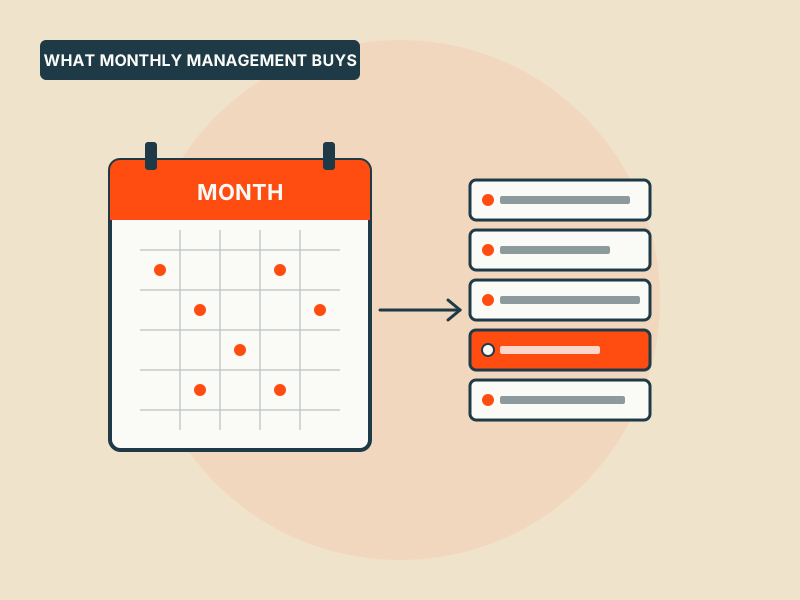
Monthly Google Ads management: what you should actually be paying for
A straight breakdown of what a proper monthly retainer includes, what it doesn't, and how to tell whether the fee you're paying maps to actual work on the account.
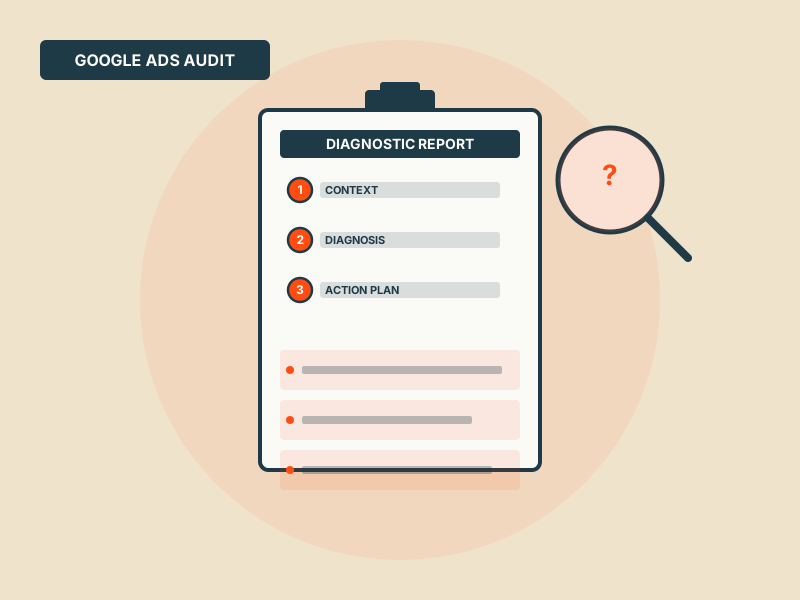
What's in a Google Ads audit, and when you actually need one
Most "audits" are a checklist someone runs to make the buyer feel examined. A real one is a diagnosis. Here's what separates the two and when to commission one.
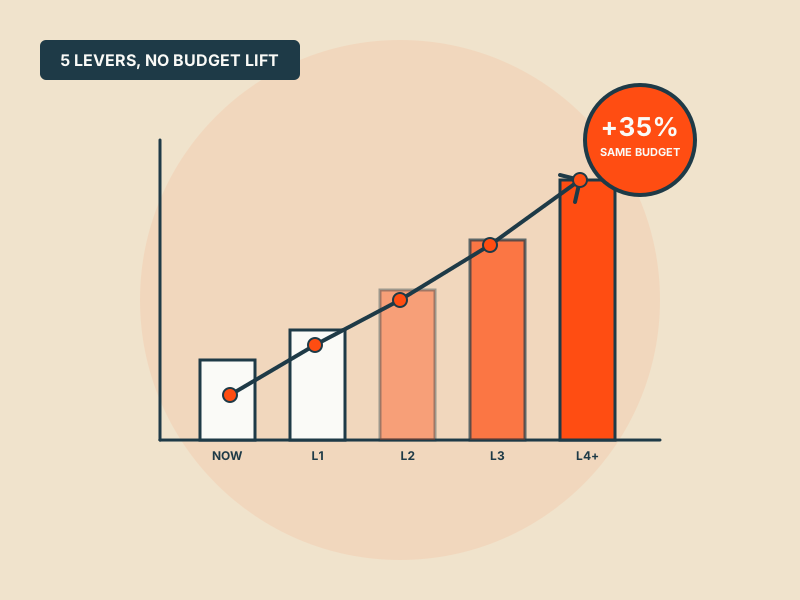
How to improve Google Ads performance without raising the budget
Almost every "we need to raise the budget" conversation should start with "what's the current budget actually doing". Five levers that improve output from the spend you already have.
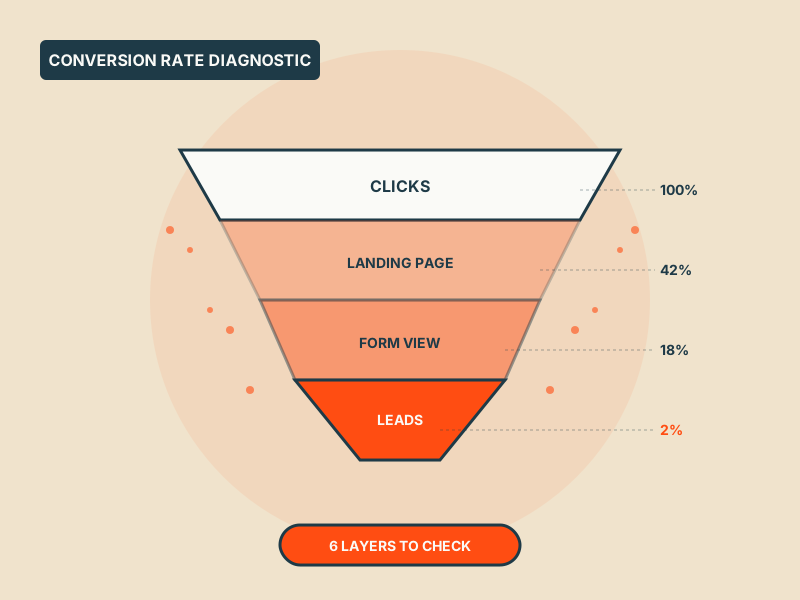
Google Ads low conversion rate: a systematic fix list
Conversion rate is an effect, not a cause. Walk backwards from the number through the six layers that actually move it, bid strategy, audience match, ad-to-landing coherence, and three more.
Wasting money on Google Ads? 7 places it's actually leaking
The budget is going somewhere, it's usually the same seven leaks, not the one the dashboard is flagging. A diagnostic walkthrough.
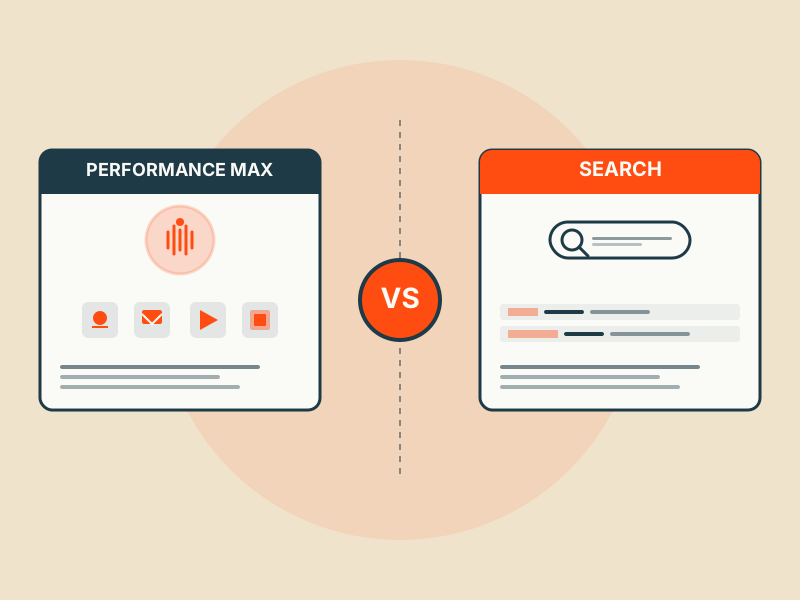
Performance Max vs Search: when to use which
A decision framework for where Performance Max actually earns its place alongside Search, and the single biggest mistake advertisers make running both.
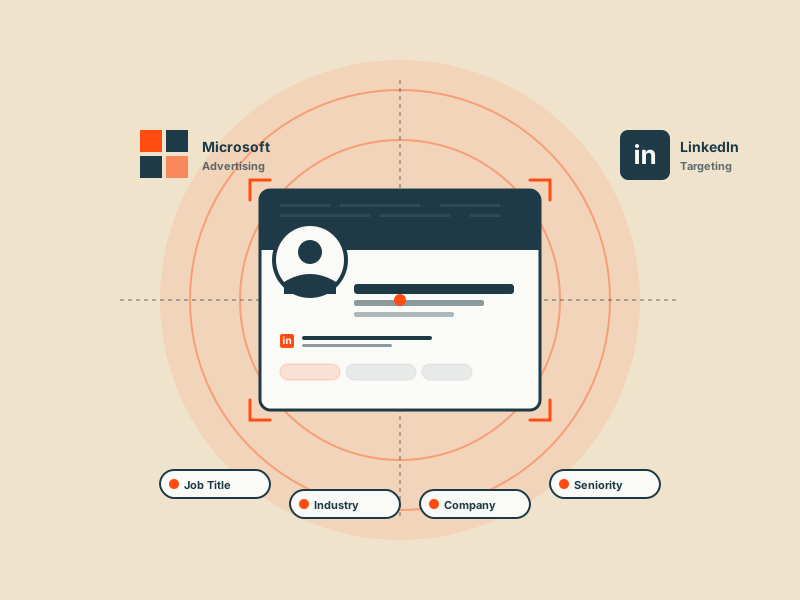
LinkedIn Profile Targeting on Microsoft Ads: a real-world test
We ran £20k through identical campaigns with and without LinkedIn layers to measure the real B2B uplift. What worked, what didn't, and the playbook we run now.
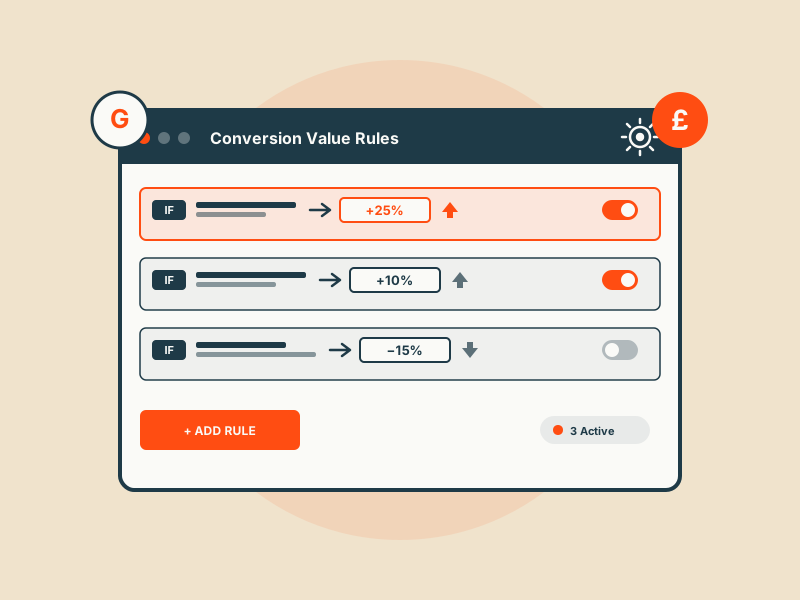
Conversion Value Rules: the most overlooked setting in Google Ads
Smart bidding is only as good as the values you feed it. Conversion Value Rules are the fix, and the three rules every serious account should run.