
GA4 is changing channel groupings under your nose, audit yours before the reports lie
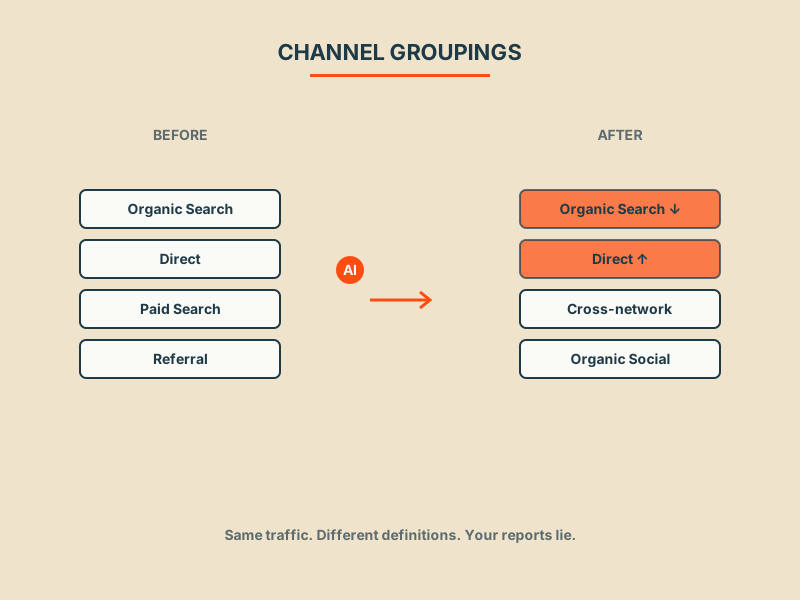
GA4's AI Assistant is quietly rewriting default channel groupings while your dashboards keep looking clean. Branded traffic shifts into Direct, social referrals migrate to Organic Social, year-on-year comparisons stop being comparable. If you don't own the definitions in your reporting stack, you don't own the insight.
GA4's "AI Assistant" is changing the default channel groupings in the background. Not a bug. Not an outage. The tool is updating its interpretation of which traffic counts as Direct vs Organic vs Paid Search vs Referral, and the numbers in your reports shift accordingly. Branded traffic that used to be Organic is showing up as Direct. Some Direct sessions are being re-attributed to Referral. Year-on-year comparisons that looked clean a month ago are no longer apples to apples.
Most people have not noticed yet. The reports still load. The charts still render. The deltas look normal because the AI is recategorising both this month and last month against its current rules, so the trend appears stable. It is, but the underlying definitions have moved underneath it.
This is not a "Google is evil" argument. It is a governance argument. If you do not own the definitions in your reporting stack, you do not own the insight. You are renting it from whoever controls the defaults.
Why this matters more than it sounds
Channel grouping is upstream of everything else in your reporting. Source/medium feeds into channel. Channel feeds into "where is our growth coming from?" That answer feeds into budget allocation. Budget allocation feeds into what you bid on, what you write, where you put your team.
When the channel groupings shift, every downstream answer shifts with them. The budget you defended last quarter on the basis that "Organic is up 18%" may not actually have grown, it may just have absorbed traffic that used to live in Direct because the AI changed its mind about what counts as direct.
Three specific patterns we have seen on UK accounts in the last 60 days:
- Branded organic traffic re-attributed to Direct. Sessions where the user typed the brand name into Google show up as Organic in legacy GA implementations. Under the new defaults, a subset of those are being classified as Direct because the AI infers the user "knew" the destination. This makes Direct look healthier and Organic look weaker even when nothing has changed in the world.
- Paid Search bleeding into Cross-network. With Performance Max and Demand Gen growing share, the "Cross-network" channel is absorbing traffic that used to be plain Paid Search. This is technically more accurate but breaks reporting tools that assumed Paid Search captured all your Google Ads volume. See Performance Max vs Search: when to use which for the upstream version of this problem.
- Referral traffic from social platforms re-classified as Organic Social. Used to land in Referral with platforms like t.co as the source; now lands in Organic Social. Sounds harmless until you realise your "Organic" reporting now includes social referrals you never controlled for.
What to actually do
The work is not glamorous. It is also not optional if you care about whether your reporting tells you the truth.
- Audit your current channel groupings. Admin → Data display → Channel groups. Look at what the default group is doing now vs what your team thinks it is doing. If they do not match, the team is making decisions on a model they no longer understand.
- Build a custom channel group with definitions you control. This is where the work actually happens. Define each channel against the source/medium/campaign rules your team agreed to, not the ones Google is iterating on quarterly. Pin these definitions to your team wiki so future hires inherit them.
- Stamp every report with which channel group it uses. "Last 90 days, GA4 default channels (May 2026 rules)" vs "Last 90 days, WMI custom channels v1.2". Without this, your year-over-year comparisons are noise.
- Reprocess historical data through the custom group. GA4 lets you apply custom groupings retroactively in the UI. Do it. Otherwise your historical baseline drifts and you cannot tell whether growth is real or definitional.
- Stop relying on the AI Assistant for any reporting that informs spending decisions. Use it for exploration if you must. Do not let it sit between you and the data you make budget calls on.
The deeper point
GA4 is one example. The same pattern repeats across every platform that "helps" by interpreting your data on your behalf, Google Ads' Conversion Modeling, Meta's data-driven attribution, Microsoft Clarity's session classification. Each one is a layer of opinion sitting between you and the raw signal, maintained by a company whose incentives do not perfectly align with yours.
You can either own that opinion or rent it. Renting is cheaper in the short term. It compounds into a deeper problem the longer you wait, because when the rented opinion changes you cannot tell the difference between "the business changed" and "the definition changed". Without that distinction, the data is no longer informing strategy. It is just adding texture to whatever you were going to do anyway.
The fix is unglamorous: own your definitions, document them, version them, apply them consistently across reporting tools. Same principle that drives the conversion-tracking work we cover in Conversion Value Rules: the most overlooked setting in Google Ads and the broader audit work in the most common ways Google Ads accounts leak money. The platforms move; your definitions hold steady.
How we approach this for clients
Every account we audit gets a custom channel group as part of the first 30 days. We document what it includes, what it excludes, and why. The client owns it. When GA4 updates its defaults next quarter (it will), nothing in the reporting changes underneath us, the custom group still classifies traffic the same way it did before.
This is part of the broader belt-and-braces approach we take to tracking infrastructure: own the definitions, validate them against business outcomes, keep the platform's interpretations as one input rather than the source of truth. Same logic, different layer.
If you want a free review of how your current channel groupings stack up against what your account is actually doing, book a free audit. We will show you which channels in your dashboard have moved meaningfully in the last 90 days and whether those moves are real or definitional.
Get a free PPC audit from the team that wrote this.
We'll review your Google Ads or Microsoft Ads account and show you three specific things we'd change in the first 30 days.