
PPC management in London, multi-channel arbitrage in the UK's most expensive auction
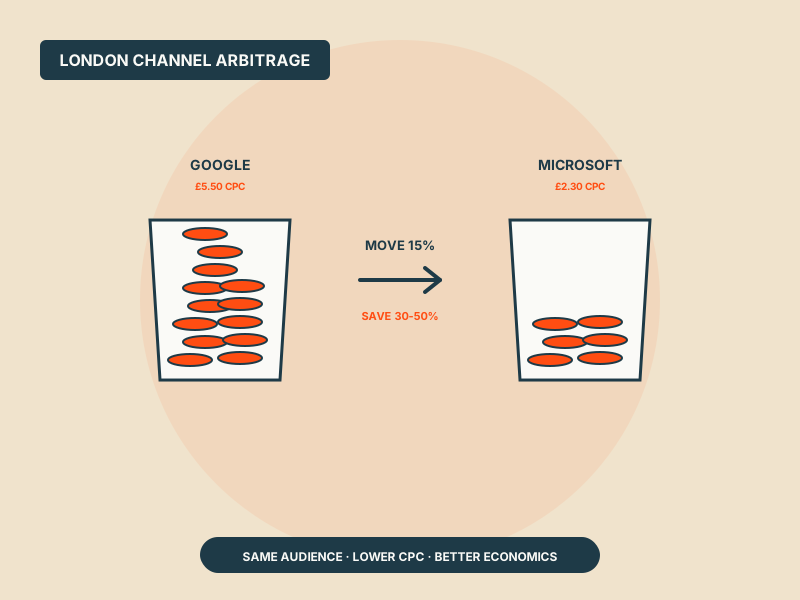
Single-channel PPC management gets quietly inefficient in London. Multi-channel scope (Google + Microsoft + sometimes Amazon) opens arbitrage opportunities that pay for the agency premium and then some.
PPC management in London auctions is structurally different from PPC anywhere else in the UK. London's auction premium on Google Ads (CPCs running 30-60% above UK regional) creates an opportunity that single-channel Google Ads management can't capture: multi-channel arbitrage. Move spend to cheaper auctions on Microsoft, Amazon Ads, or sometimes paid social, same audience, lower CPC, better unit economics.
If you're a London-based business spending £8k+/month on paid search, multi-channel PPC management is usually worth more than Google-only management. Here's why, and how the playbook actually runs.
Why multi-channel arbitrage matters more in London
The economics:
- Google Ads CPCs in London for B2B and high-value B2C: typically 30-60% above UK regional baseline
- Microsoft Ads CPCs in same auctions: typically 30-50% below Google for the same query
- Net difference: a London query that costs £5.50 on Google might cost £2.30 on Microsoft
The London-specific implication: every pound that runs on Microsoft instead of Google saves more in absolute terms in London than in Manchester or Birmingham. The arbitrage opportunity is mathematically larger because the Google premium is larger.
For a £15k/month London PPC account, moving 15% of spend from Google to Microsoft (where the audience overlaps and Microsoft has volume) typically saves £900-£1,500/month at the same business outcome. That's £11-18k/year of saved spend, multiples of the agency-fee premium for multi-channel scope.
When the arbitrage is real
Microsoft Ads arbitrage in London is reliably positive when:
B2B target audience. Microsoft skews professional and corporate device. UK B2B buyers spend significant work-hours on Bing-via-Edge devices. Audience overlap with Google is high.
High-CPC categories where Google is competitive. Financial services, legal services, B2B SaaS, professional services. Categories where Google CPCs are £3+ are exactly where Microsoft is most often 30-50% cheaper.
London-skewed customer base. The Microsoft audience that overlaps with Google is more London-weighted than national, partly because of the corporate device skew.
Brand-aware buyers. Microsoft handles brand defence well, competitor brand-bidding, generic-brand defence, etc.
It's *not* reliably positive when:
- Consumer e-commerce in mass-market categories. Microsoft volume on Bing is too low for some product searches.
- Very long-tail informational queries. Microsoft's smaller search volume means long-tail queries have unreliable performance.
- Paid-social-driven audiences. If your conversion path is "see Meta ad → search brand → buy", Microsoft has less of the picture than Google does.
A multi-channel PPC manager should be able to look at your category and tell you within 10 minutes whether Microsoft arbitrage is likely to work, before any test runs.
Beyond Microsoft: other London arbitrage plays
For specific scenarios:
Amazon Ads for product brands selling on Amazon. Amazon CPCs are usually 20-40% lower than Google Shopping for the same products. Worth running at least a small percentage of Shopping budget on Amazon if your products are listed there.
Pinterest Shopping for visual product categories (fashion, home, food, gift). Pinterest CPCs in London are roughly comparable to Google Shopping but with different audience demographics, often cheaper to acquire incremental customers vs Google-only.
Microsoft + LinkedIn Profile Targeting for B2B specifically. Microsoft owns LinkedIn, which means Bing Search campaigns can layer LinkedIn job-title or company-name targeting at bid time, see our deep-dive on LinkedIn Profile Targeting. This is unique to Microsoft and unavailable on Google. For London B2B accounts, this layer often cuts CPA by 30-50%.
What changes in account structure for multi-channel London PPC
Most accounts we audit are structured Google-first, with Microsoft as an afterthought (if running at all). For genuine London multi-channel PPC, the structure should reflect the multi-channel reality:
Cross-platform reporting. Total spend across Google + Microsoft + Amazon broken out by campaign theme, not just by platform. Otherwise you can't see whether your "London brand defence" campaign is working overall, only on each platform separately.
Budget rebalancing process. Monthly review of CPC and CPA by platform-and-audience segment. Move budget to whichever platform's auction is most efficient for that segment in that month. This is operational work that doesn't happen in single-platform accounts.
Conversion tracking aligned across platforms. Same conversion definitions, same value rules, same Enhanced-Conversions-style offline data flowing to all platforms. Otherwise you can't compare them on a level basis.
Audience signals replicated. Customer Match list uploaded to Google AND Microsoft. Lookalike-style audiences set up in both. The audiences should be the same across platforms; only the bid behaviour should differ.
This is operationally more complex than single-platform management. The agency premium is real but usually paid back many times over by the arbitrage itself.
Pricing patterns
Multi-channel PPC management in London typically prices at:
- £2,500-£4,500/month for accounts spending £10-25k/month total paid
- £4,500-£8,000/month for accounts spending £25-60k/month
- £8,000+/month or % of spend for accounts £60k+/month
That's about 20-30% above single-channel-Google equivalents. The premium is real because the team needs Microsoft expertise (which is rarer), Amazon Ads expertise (rarer still), and operational discipline to actually rebalance budget across platforms (most agencies say they will, few do).
If pricing is at parity with Google-only management, ask about the actual Microsoft work cadence. *"How often do you review Microsoft search-terms for this account?"*, if the answer is monthly or less, the multi-channel scope is on paper not in practice.
The diagnostic test
For any London PPC management engagement (existing or prospective), one diagnostic test:
Pull the last 90 days of total paid spend by platform. What share is on Microsoft? What share on Amazon (if applicable)? Compare to Google.
If you're running London PPC and Microsoft is under 5% of total spend, you're probably leaving arbitrage on the table. If it's 10-25%, you're playing the multi-channel game properly. If it's 25%+, you're either in a category that genuinely favours Microsoft or you're under-investing in Google.
Where we sit
WMI is a PPC consultancy, Google + Microsoft + tracking, based in London. Most of our accounts are UK-based and the majority compete in London auctions to some degree. Microsoft Ads runs as standard on every account we manage; the share of spend depends on category but typically lands in the 10-25% range as we'd expect for London-focused accounts.
For an audit specific to your London PPC account, book a free audit. We'll run the cross-platform spend analysis as part of the standard audit and flag where arbitrage opportunities are sitting unused.
Get a free PPC audit from the team that wrote this.
We'll review your Google Ads or Microsoft Ads account and show you three specific things we'd change in the first 30 days.